
Gushtaba: Pounded Meat, Yoghurt Gravy and Wazwan
Gushtaba, also spelt goshtaba, is a Kashmiri preparation of pounded meat shaped into substantial balls and cooked in a yoghurt-based gravy.
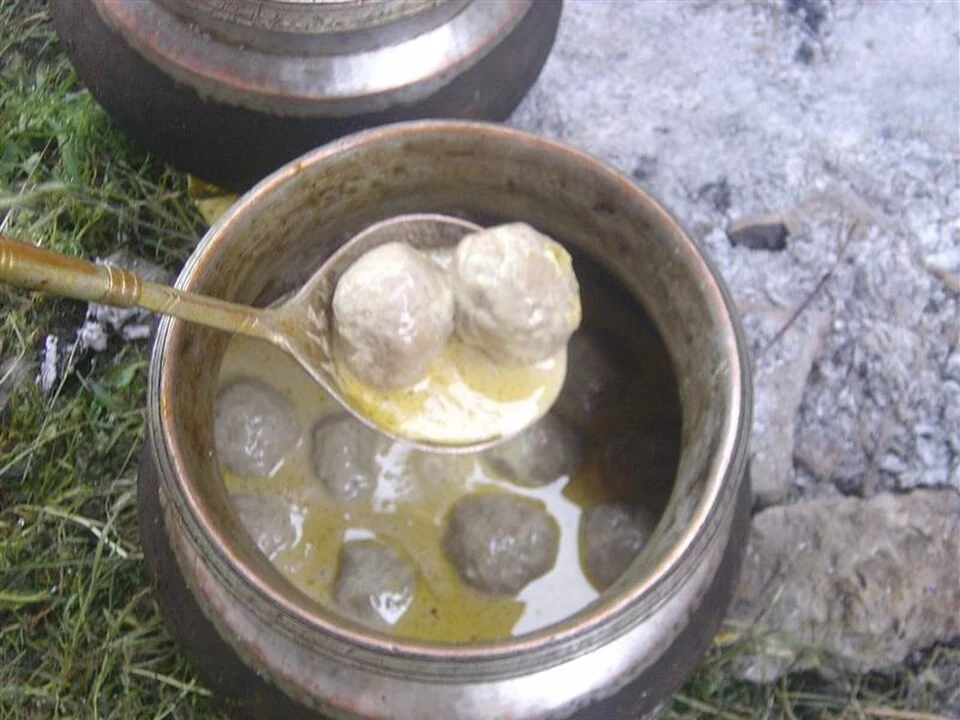
Gushtaba, also spelt goshtaba, is a Kashmiri preparation of pounded meat shaped into substantial balls and cooked in a yoghurt-based gravy. It is especially associated with wazwan, where it is often described as a concluding meat course. The smooth meat texture and pale sauce distinguish it from rista, although both rely on skill in preparing the meat before cooking.[1]
The work before the pot
Pounding changes the consistency of meat and distributes fat through the mixture. Shaping and cooking then determine how the finished ball holds together and feels when eaten. A meatball made from a coarsely minced mixture is not automatically equivalent to a preparation produced through the traditional pounding process. The visible form can be similar while the internal texture differs.[1]
The district account of wazwan identifies gushtaba as meatballs in a yoghurt gravy. This is a useful description of its place among other feast dishes, but it does not specify one compulsory household formula. The gravy and seasoning need to be understood through a particular recipe and cooking tradition.[2]
A dish within a larger meal
A formal serving sequence gives a dish meaning beyond its ingredients. Gushtaba can signal the progress of a feast, while the preparation embodies work undertaken well before guests sit down. Describing it only as a rich curry overlooks that relationship between craft, organisation and hospitality.
Yoghurt-based sauces also illustrate how handling matters alongside ingredients. Heat, mixing and the condition of the dairy component affect the appearance of a sauce. A general cultural description cannot replace a tested recipe with measured stages, and a photograph cannot establish the precise method used in the pictured serving.
Compare Rista, which is commonly associated with a red gravy, and Rogan Josh, which uses pieces of meat rather than the same shaped form. The separate Noon Chai entry helps place ceremonial cooking alongside everyday food habits. These differences make individual dish entries valuable even when the dishes appear together under the wider name wazwan.
Photograph and map record
Photograph: Oniongas via Wikimedia Commons. Licence: Public domain. Recorded capture date: 2009-05-27. Resized and converted to WebP; scene content unchanged. This is a dated view, not confirmation of the site’s present appearance.


Map marker: 34.083, 74.797. Editorial regional-context marker for Srinagar. This subject is not a single physical destination: the point is not a birthplace, workshop, harvest site, species range, guaranteed wildlife locality or boundary of language use. View location on OpenStreetMap · View Google Maps · Google directions · OpenStreetMap directions.
Research checked: 14 October 2026. For a visit, confirm current access, transport and opening information with the relevant authorities. This encyclopedia profile provides geographical and historical context.
Sources & references
[1] Gushtaba — secondary historical/geographical overview
https://en.wikipedia.org/wiki/Gushtaba ↗
[2] Budgam district: Wazwan
https://budgam.nic.in/culinary-delight/wazwan/ ↗
Photograph and licence
https://commons.wikimedia.org/wiki/File:Goshtaba_wazwan.jpg ↗
https://commons.wikimedia.org/wiki/File:Goshtaba_wazwan.jpg#Licensing ↗
Related reading

Aali Masjid: Open Ground and a Historic Srinagar Mosque
Aali Masjid, also written Ali Masjid, is a historic mosque in Srinagar's Eidgah area.

Amar Singh College: Education, Campus Heritage and Institutional Change
The growth of an educational institution from a technical institute, with campus conservation and academic resources.
Bakshi Stadium: Football and a Public Sports Venue in Srinagar
Bakshi Stadium is a major sports venue in Srinagar, particularly associated with football.