
Kashmiri Wedding Customs: Family, Ceremony and Community Variation
Kashmiri wedding customs comprise varied family and community practices rather than a single ceremony followed identically by everyone. Singing, preparations, hospitality and religious rites can all contribute, but their sequence and meanings depend on the tradition being described. A careful account identifies its community and source instead of presenting one household’s wedding as a universal regional rule.
Kashmiri wedding customs comprise varied family and community practices rather than a single ceremony followed identically by everyone. Singing, preparations, hospitality and religious rites can all contribute, but their sequence and meanings depend on the tradition being described. A careful account identifies its community and source instead of presenting one household’s wedding as a universal regional rule. [1]
Shared celebration and distinct rituals
Descriptions of Kashmiri Pandit marriage customs include preparatory observances, singing gatherings and the marriage ceremony. Accounts of Muslim weddings organize religious and social occasions differently. These records should remain distinguishable: a similar word or a shared setting does not make the underlying rites interchangeable. [2]
Marriage is both an event and a process of preparation. Invitations, family arrangements, clothing and food involve work before guests assemble. Recognizing this wider process makes a cultural account more useful than a list of picturesque moments disconnected from the people who organize them.
Song, dress and hospitality
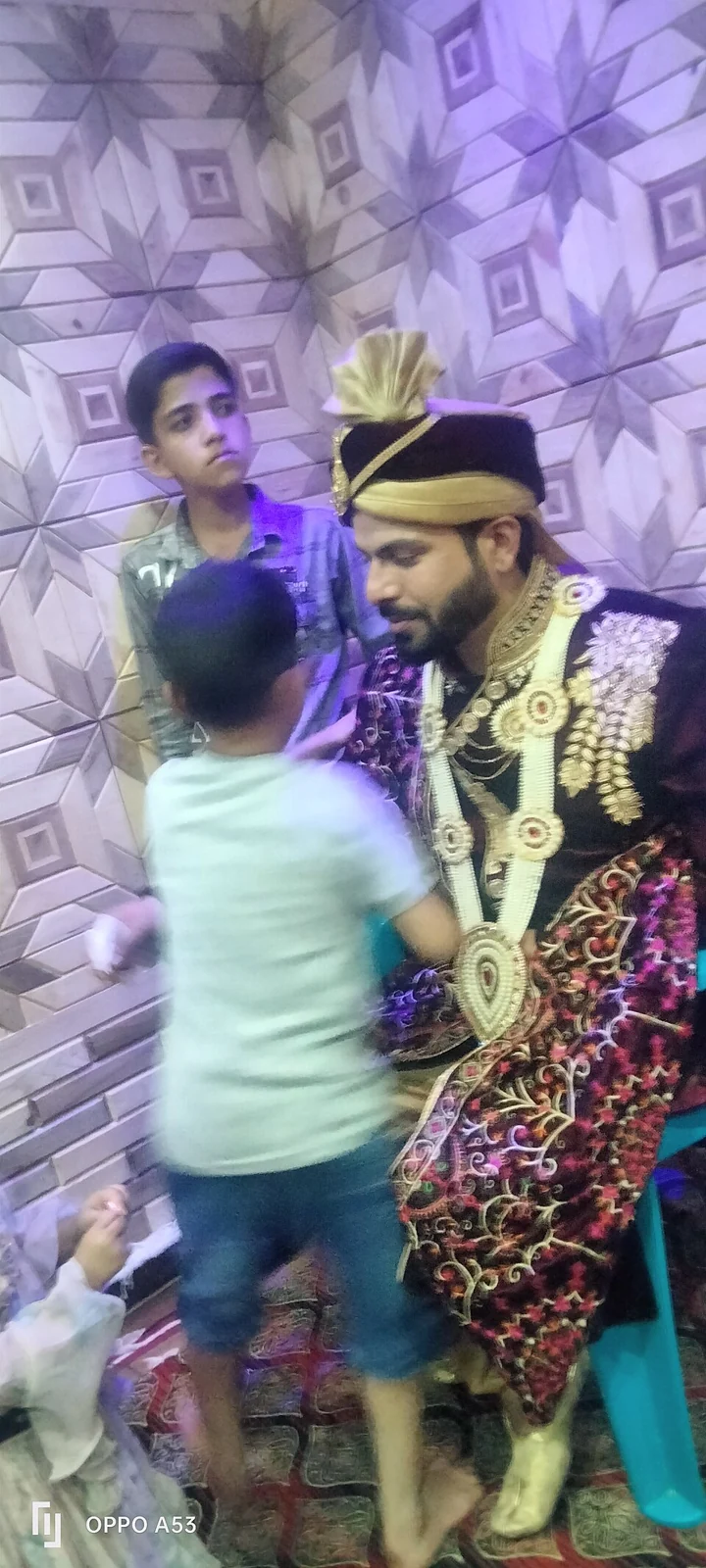
Wanvun is an important cross-reference because group singing belongs to ceremonial life and can carry words, rhythm and memory. It deserves its own entry rather than being reduced to background sound. Likewise, a wedding garment illustrates clothing, not proof that every community wears the same outfit.
Food descriptions need similar care. A prominent feast tradition can be discussed in its own right without claiming that all Kashmiri weddings serve an identical menu. Household choices, religious practice and circumstances can produce variation within a named community as well as between communities.
Documenting customs respectfully
Photographs should identify the actual recorded subject, preserve the source credit and avoid assigning a ritual name that the source does not support. A performance staged for a camera may document a cultural presentation rather than a complete marriage ceremony. The Srinagar marker here is regional context only, not a wedding venue. Cross-reference Wanvun, traditional clothing and cuisine to build a fuller account. Distinguishing documented practices from universal claims allows the encyclopedia to represent living traditions without turning variation into error or treating people’s private celebrations as public visitor attractions.
Image and map record
Image: Zahid099 via Wikimedia Commons. Licence: CC BY-SA 4.0. Recorded capture date: 2023-08-15 18:04:03. Resized and converted to WebP; image content unchanged. This is a dated view, not confirmation of the site’s present appearance.
Map marker: 34.083, 74.797. Labelled regional/locality context marker; not a verified public entrance, pickup point, birthplace, residence, venue, trailhead, crop boundary or visitor route. View location on OpenStreetMap · View Google Maps · Google directions · OpenStreetMap directions.
Research checked: 15 October 2026. For a visit, confirm current access, transport and opening information with the relevant authorities. This encyclopedia profile provides geographical and historical context.
Sources & references
[1] Research study: Wanvun in Kashmiri marriage ceremonies
https://ijellh.com/index.php/OJS/article/view/11581 ↗
[2] Koshur cultural archive: Kashmiri Pandit marriage observances
https://koshur.org/music/festivals/marriage/index.html ↗
Image and licence
https://commons.wikimedia.org/wiki/File:Kashmiri_wedding_dress.jpg ↗
Related reading

Aali Masjid: Open Ground and a Historic Srinagar Mosque
Aali Masjid, also written Ali Masjid, is a historic mosque in Srinagar's Eidgah area.

Agha Shahid Ali: Poetry, Memory and Kashmir
Agha Shahid Ali was a Kashmiri-American poet who lived from 1949 to 2001. Born in New Delhi and raised in a family associated with Kashmir, he develop

Amar Singh College: Education, Campus Heritage and Institutional Change
The growth of an educational institution from a technical institute, with campus conservation and academic resources.