
Wanvun: Group Singing and Kashmiri Ceremonial Life
Wanvun, also written Wanwun, is a form of group singing associated with Kashmiri ceremonial occasions, particularly weddings. Its significance lies in voices performing together and in the connection between song and an unfolding social event. It is a musical practice rather than the name of every Kashmiri dance or a fixed programme repeated identically at all celebrations.
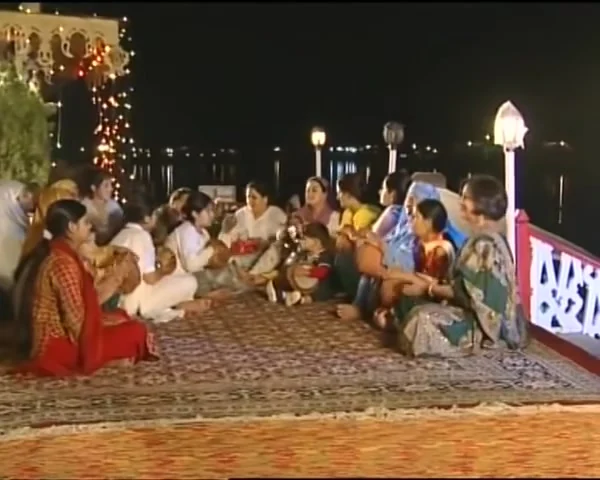
Wanvun, also written Wanwun, is a form of group singing associated with Kashmiri ceremonial occasions, particularly weddings. Its significance lies in voices performing together and in the connection between song and an unfolding social event. It is a musical practice rather than the name of every Kashmiri dance or a fixed programme repeated identically at all celebrations. [1]
Voices and occasion
Research on Wanvun in marriage ceremonies examines its place in wedding observances and the participation of women. A performance belongs to a particular community, household and occasion. Words and ceremonial associations should therefore be identified from the actual account rather than assumed to be uniform across all Kashmiri traditions. [2]
Collective singing changes the relationship between performer and audience. Participants can contribute to an occasion through their voices instead of watching a separate concert artist. This makes the gathering itself part of the musical setting, and helps explain why a recording alone may not capture the full ceremonial experience.
Song and cultural memory
A repeated tune or phrase can connect an event with earlier performances remembered by participants. The practice therefore offers a way to study transmission: who knows the words, how others join and which parts are adapted to the occasion. These are questions about a living tradition, not evidence that every version must be identical.
Wanvun should be distinguished from Rouf when a source describes dance. Singing and movement may share a celebration, but one photograph of dancers cannot automatically illustrate a specific choral practice. An honest caption can identify wedding context without falsely presenting the image as a documented Wanvun session.
Recording the tradition
A useful record includes the place, date, occasion and the participants’ description of the performance. Lyrics need accurate transcription and, where appropriate, permission from the relevant rights holders. A translation should preserve its status as a translation rather than being labelled the original Kashmiri text. The map is a Srinagar context marker, not a performance venue or an exclusive origin point. Read this entry with wedding customs, Rouf and Kashmiri-language profiles to see how related traditions remain distinct while contributing to the same cultural landscape.
Image and map record
Image: Indian Diplomacy via Wikimedia Commons. Licence: CC BY 3.0. Recorded capture date: 2012-03-26. Still extracted from source video at 00:30; converted to WebP. This is a dated view, not confirmation of the site’s present appearance.
Map marker: 34.083, 74.797. Labelled regional/locality context marker; not a verified public entrance, pickup point, birthplace, residence, venue, trailhead, crop boundary or visitor route. View location on OpenStreetMap · View Google Maps · Google directions · OpenStreetMap directions.
Research checked: 15 October 2026. For a visit, confirm current access, transport and opening information with the relevant authorities. This encyclopedia profile provides geographical and historical context.
Sources & references
[1] Wikipedia: Wanvun (secondary overview)
https://en.wikipedia.org/wiki/Wanvun ↗
[2] Research study: Wanvun in Kashmiri marriage ceremonies
https://ijellh.com/index.php/OJS/article/view/11581 ↗
Image and licence
https://commons.wikimedia.org/wiki/File:The_Joyful_Rhythms_of_a_Kashmiri_Wedding.webm ↗
Related reading

Aali Masjid: Open Ground and a Historic Srinagar Mosque
Aali Masjid, also written Ali Masjid, is a historic mosque in Srinagar's Eidgah area.
Agha Shahid Ali: Poetry, Memory and Kashmir
Agha Shahid Ali was a Kashmiri-American poet who lived from 1949 to 2001. Born in New Delhi and raised in a family associated with Kashmir, he develop

Amar Singh College: Education, Campus Heritage and Institutional Change
The growth of an educational institution from a technical institute, with campus conservation and academic resources.