
Mansar Lake: Sacred Shores and the Surinsar–Mansar Wetland
Mansar’s wooded setting, devotional traditions, lake ecology and place within the combined Ramsar wetland.
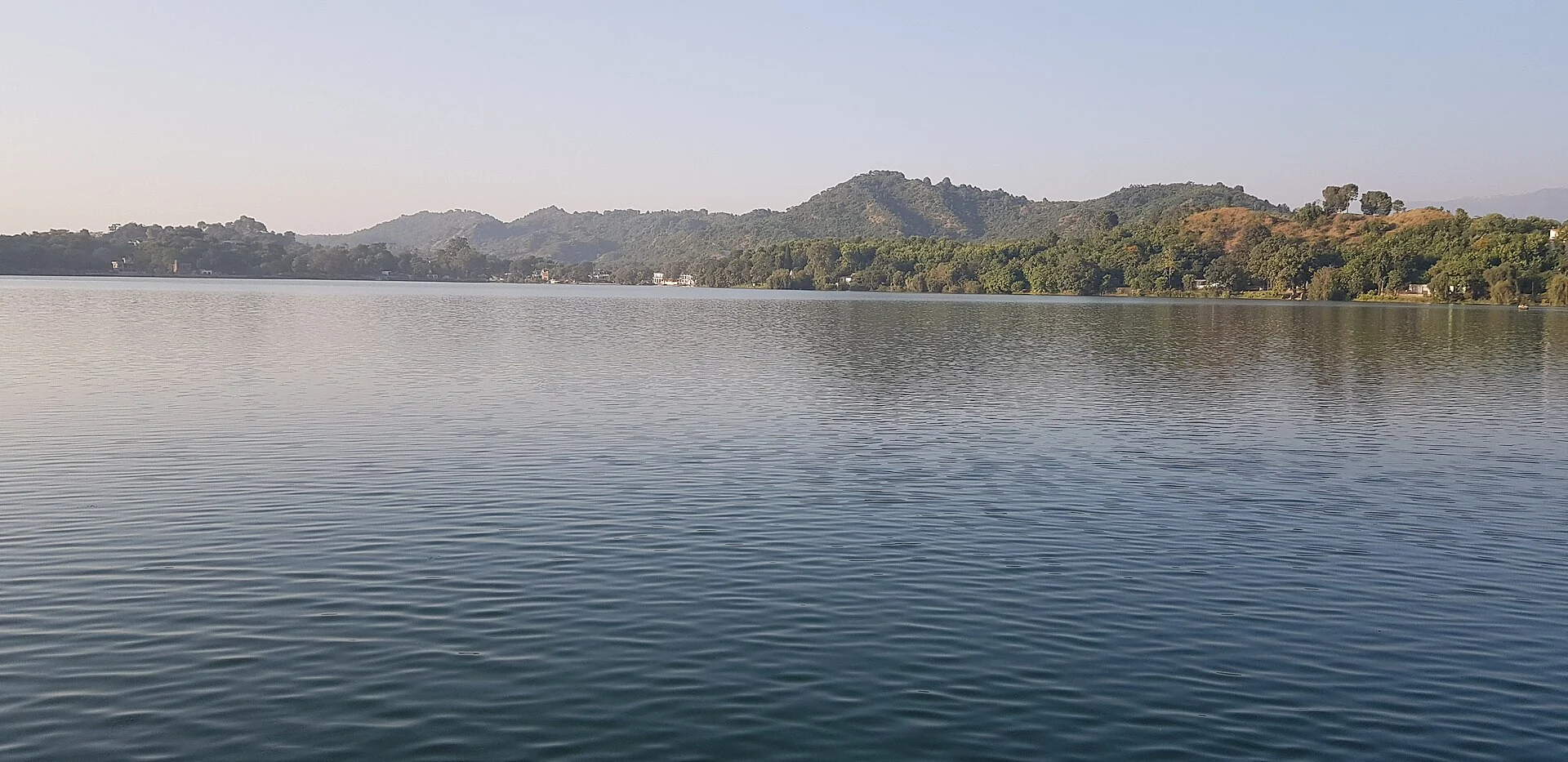
Mansar Lake is a freshwater lake in the Jammu region, filed here under Samba district. It is commonly discussed together with Surinsar through the combined Surinsar–Mansar wetland designation. The individual lake, its neighbouring shrines and the larger protected wetland are related subjects, but their names do not describe identical boundaries. This distinction matters when comparing district descriptions, tourism accounts and conservation records.[2]
Landscape and water
The Directorate of Tourism Jammu describes Mansar as a lake surrounded by wooded hills, with boating among its recreational associations. Its setting in the lower hills gives it a different landscape character from the high mountain lakes of Kashmir or Ladakh. The department’s stated road distance from Jammu is a route description; it should not be treated as an exact distance from every part of the city.[1]
The Wetlands of India profile describes Mansar as primarily supplied by surface runoff, with additional mineralised inflow through surrounding cultivated land. It presents Surinsar and Mansar as a composite freshwater wetland, designated on 8 November 2005. The profile’s listed 350 hectares refers to the combined designated site, not a measurement of Mansar’s open-water surface alone.[3]
Sacred shores and traditions
The Jammu tourism account identifies a shrine to Sheshnag on the eastern bank and several temples around the lake. Its narratives connect the two lakes with traditions drawn from the Mahabharata. Such stories are part of the cultural history of the place. They should be presented as devotional traditions, rather than geological evidence for an underground passage between two waterbodies.[1]
The secondary account describes circumambulation by newly married couples and ceremonies performed by some Hindu communities. These practices show how the shore functions as a religious landscape as well as a place of recreation. They should not be assumed to apply uniformly to all visitors or communities. A lake article can introduce these traditions while leaving detailed shrine histories to separate entries.[2]
Ecology and conservation
The national wetland profile records waterbirds and turtles among the site’s ecological values, alongside cultural importance and water-related benefits. It identifies pollution, siltation and invasive species as threats, and notes pressures associated with visitors and runoff. This combination of spiritual use, habitat and recreation makes management a shared concern: keeping the shore attractive is only one part of maintaining the wetland’s functions.[3]
Location and connected reading
Administrative labels differ across older composite-site records and present destination references. This article’s Samba filter follows the individual Mansar Lake reference; it does not recategorise every part of the combined wetland. The map marker identifies Mansar itself, rather than the centre or boundary of the Surinsar–Mansar protected area.[2]
Read Raghunath Temple, Jammu for another devotional landscape in the Jammu region. Compare Wular Lake for a much larger connected wetland and Dal Lake for a Kashmir waterscape closely associated with urban life.
Photograph and map record
Photograph: Drharleen via Wikimedia Commons. Licence: CC BY-SA 4.0. Recorded capture date: 2020-10-11. Resized and converted to WebP; scene content unchanged. This is a dated view, not confirmation of the site’s present appearance.
_Dr._Harleen_Kaur.jpg)
Map marker: 32.6961, 75.1468. Representative point from the cited secondary geographical reference; not a surveyed boundary, entrance or access recommendation. View location on OpenStreetMap.
Research checked: 13 October 2026. For a visit, confirm current access, transport and opening information with the relevant authorities. This encyclopedia profile provides geographical and historical context.
Sources & references
[1] Directorate of Tourism Jammu — Lakes and water bodies
https://jammutourism.jk.gov.in/exploreJammu-Water-Bodies.html ↗
[2] Mansar Lake — secondary geography and traditions
https://en.wikipedia.org/wiki/Mansar_Lake ↗
[3] Wetlands of India — Surinsar–Mansar Lakes
https://indianwetlands.in/view-wetland/?profile=MTM0OA%3D%3D ↗
Photograph and licence
Related reading
Dal Lake: Waterways, Floating Gardens and Life on the Lake
An introduction to Dal Lake’s connected basins, working waterscape, floating gardens, boats and cultural setting.
Nigeen Lake: Connections, Localities and Waterside Life
Nigeen’s alternate names, links with neighbouring waters, lakeside localities, boats and environmental context.