
Raghunath Temple, Jammu: Dogra Patronage and Sacred Architecture
Jammu’s Raghunath temple complex, its principal deity, Dogra patronage, architecture and manuscript heritage.
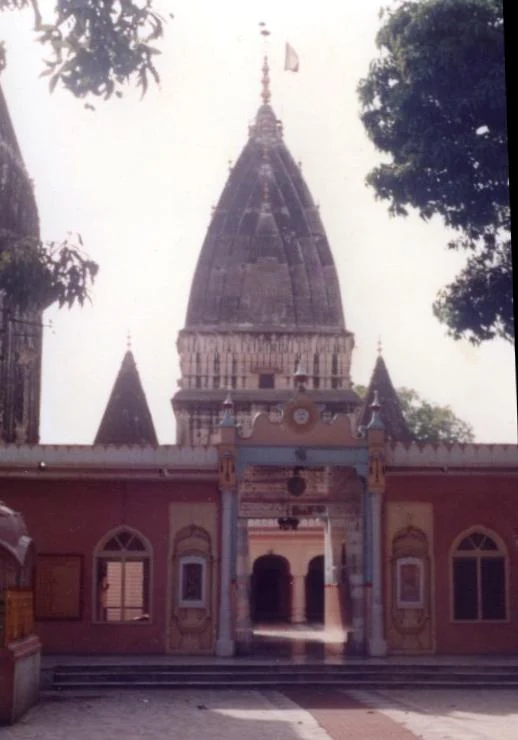
Raghunath Temple is a Hindu temple complex in Jammu city, in the Jammu region of Jammu and Kashmir. Its principal deity is Rama, also worshipped as Raghunath. The complex consists of seven shrines and is closely associated with Dogra royal patronage. The district administration presents it as a major religious landmark of the city, while its architecture and manuscript collections also make it a subject of historical study.[1]
Dogra patronage and chronology
Maharaja Gulab Singh and Maharaja Ranbir Singh are associated with the temple’s construction. The sources consulted agree on these patrons but give differing chronological formulations. The district account describes work during 1853–1860, while the secondary article’s narrative places the beginning under Gulab Singh in 1835 and completion under Ranbir Singh in 1860; its infobox gives another range. This entry therefore uses the broader description “nineteenth century” rather than present one disputed date as settled.[2]
Architecture and worship
The district account describes a separate shikhara, or rising temple tower, for each of the seven shrines. The central shrine is dedicated to Rama, with other deities represented elsewhere in the complex. Gold-covered interior surfaces, arches and devotional images are among the features it identifies. Together, these elements make the site a group of connected sacred spaces rather than a single freestanding tower.[1]
The temple’s towers provide a visible architectural identity, but the meaning of the site is also shaped by worship. For an encyclopedia, the distinction is useful: a photograph records an exterior at a particular moment, while a devotional account explains the role of shrines and deities. Neither alone provides a complete account of the place. This entry brings the two forms of description together without claiming to document every room or ritual.
Manuscript heritage
The official account notes a library containing Sanskrit books and manuscripts. This gives the complex a place in the history of learning as well as worship. The existence of a manuscript collection does not establish that every item is publicly displayed or available for direct consultation. Individual works need their own catalogue information, provenance and dates before they can become separate scholarly entries.[1]
The urban setting
The secondary geographical reference places the complex in the older part of Jammu, north of the Tawi River. The district’s places-of-interest listing identifies Raghunath Mandir Chowk as its urban address. These descriptions connect the monument with a working city rather than an isolated heritage enclosure. The map marker used here is representative of the complex, not a surveyed entrance or an accessibility assessment.[2][3]
Related devotional landscapes
This is the Jammu temple entry; the shared name Raghunath should not by itself be used to identify a shrine in another town. Compare Mansar Lake for a sacred shoreline in the Jammu region, and Jamia Masjid, Srinagar for a different religious and architectural tradition. Leh Palace provides another perspective on royal patronage and monumental building within the encyclopedia’s regional scope.
Photograph and map record
Photograph: Bhadani at English Wikipedia via Wikimedia Commons. Licence: CC BY-SA 3.0. Recorded capture date: Taken in 1988. Resized and converted to WebP; scene content unchanged. This is a dated view, not confirmation of the site’s present appearance.

Map marker: 32.730401, 74.862325. Representative point from the cited secondary geographical reference; not a surveyed boundary, entrance or access recommendation. View location on OpenStreetMap.
Research checked: 13 October 2026. For a visit, confirm current access, transport and opening information with the relevant authorities. This encyclopedia profile provides geographical and historical context.
Sources & references
[1] District Jammu — Raghunath Temple
https://jammu.nic.in/tourist-place/raghunath-temple-jammu/ ↗
[2] Raghunath Temple — secondary historical and geographical reference
https://en.wikipedia.org/wiki/Raghunath_Temple ↗
[3] District Jammu — Places of interest
https://jammu.nic.in/places-of-interest/ ↗
Photograph and licence
https://commons.wikimedia.org/wiki/File:Raghunath_Temple_Jammu.JPG ↗