
Kashmiri: Language, Scripts and Regional Literature
Kashmiri, known to speakers as Koshur, is an Indo-Aryan language strongly associated with the Kashmir Valley and surrounding areas.
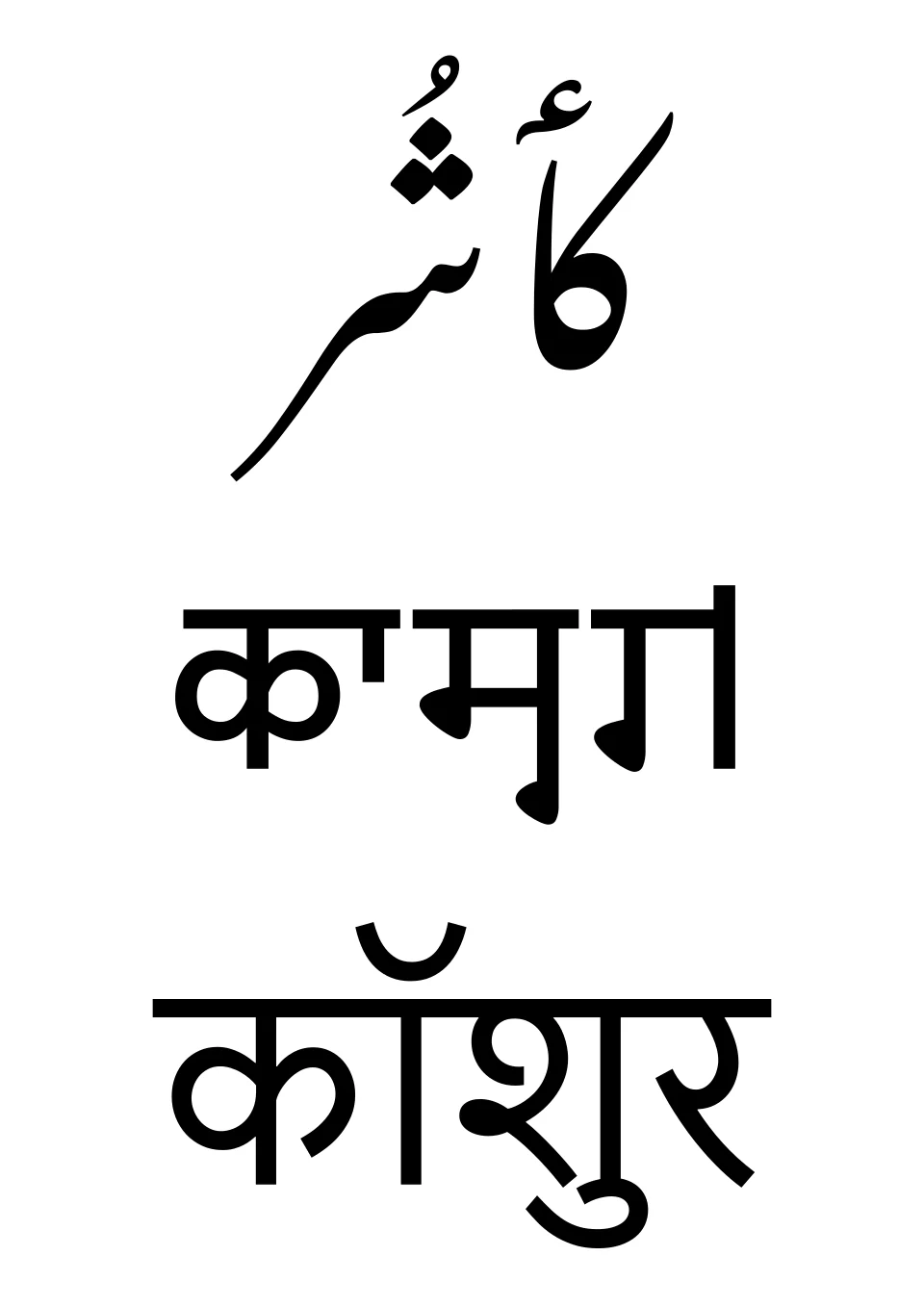
Kashmiri, known to speakers as Koshur, is an Indo-Aryan language strongly associated with the Kashmir Valley and surrounding areas. Its grammar, sound system and literature deserve attention in their own right. A language is not identical with an administrative district, a religion or one writing system, and its speakers may also use other languages in different settings.[1]
Speech and writing
Perso-Arabic, Devanagari and Sharada belong to the history and practice of writing Kashmiri in different contexts. A script is a system for representing language; changing the script does not by itself create a different spoken language. Transliteration also differs from translation: one changes the written representation, while the other conveys meaning in another language.[1]
The Central Institute of Indian Languages publishes Kashmiri learning materials and primers, including a Perso-Arabic primer. These records demonstrate the value of language-specific teaching resources. A script sample in an image is an illustration of writing, not evidence about how every Kashmiri speaker reads or spells.[2]
Literature and everyday use
Sahitya Akademi maintains Kashmiri publication and award records. Such catalogues help locate particular authors, translations and works instead of presenting literature as a list of famous names without bibliographic details. A title, author, edition and language give readers a stronger starting point for further study.[3]
Everyday vocabulary connects the language with many other encyclopedia subjects. Food names, place names and craft terms often carry meanings that are lost in a loose English label. Recording a local term with its context can preserve that connection without assuming that one spelling resolves every dialect or script variation.
Compare Noon Chai, where a name conveys the salted-tea tradition, and Kangri, a material-culture term. The separate Dogri and Ladakhi entries recognise distinct regional language histories. This introductory profile does not replace a dictionary, a pronunciation resource or a complete grammar.
Photograph and map record
Photograph: Kashmiri via Wikimedia Commons. Licence: Public domain. Recorded capture date: 10 May 2024. Resized and converted to WebP; scene content unchanged. This is a dated view, not confirmation of the site’s present appearance.


Map marker: 34.083, 74.797. Editorial regional-context marker for Srinagar. This subject is not a single physical destination: the point is not a birthplace, workshop, harvest site, species range, guaranteed wildlife locality or boundary of language use. View location on OpenStreetMap · View Google Maps · Google directions · OpenStreetMap directions.
Research checked: 14 October 2026. For a visit, confirm current access, transport and opening information with the relevant authorities. This encyclopedia profile provides geographical and historical context.
Sources & references
[1] Kashmiri language — secondary historical/geographical overview
https://en.wikipedia.org/wiki/Kashmiri_language ↗
[2] CIIL: Kashmiri primers
https://www.ciil.org/primers_book ↗
[3] Sahitya Akademi: Kashmiri publications
https://sahitya-akademi.gov.in/publications/kashmiri.pdf ↗
Photograph and licence
https://commons.wikimedia.org/wiki/File:Koshur.svg ↗
https://commons.wikimedia.org/wiki/File:Koshur.svg#Licensing ↗
Related reading

Aali Masjid: Open Ground and a Historic Srinagar Mosque
Aali Masjid, also written Ali Masjid, is a historic mosque in Srinagar's Eidgah area.

Amar Singh College: Education, Campus Heritage and Institutional Change
The growth of an educational institution from a technical institute, with campus conservation and academic resources.
Bakshi Stadium: Football and a Public Sports Venue in Srinagar
Bakshi Stadium is a major sports venue in Srinagar, particularly associated with football.