
Kangri: Earthenware, Wicker and a Kashmiri Warming Tradition
A kangri is a portable warming vessel associated with Kashmir, combining an earthenware bowl with a woven wicker surround.
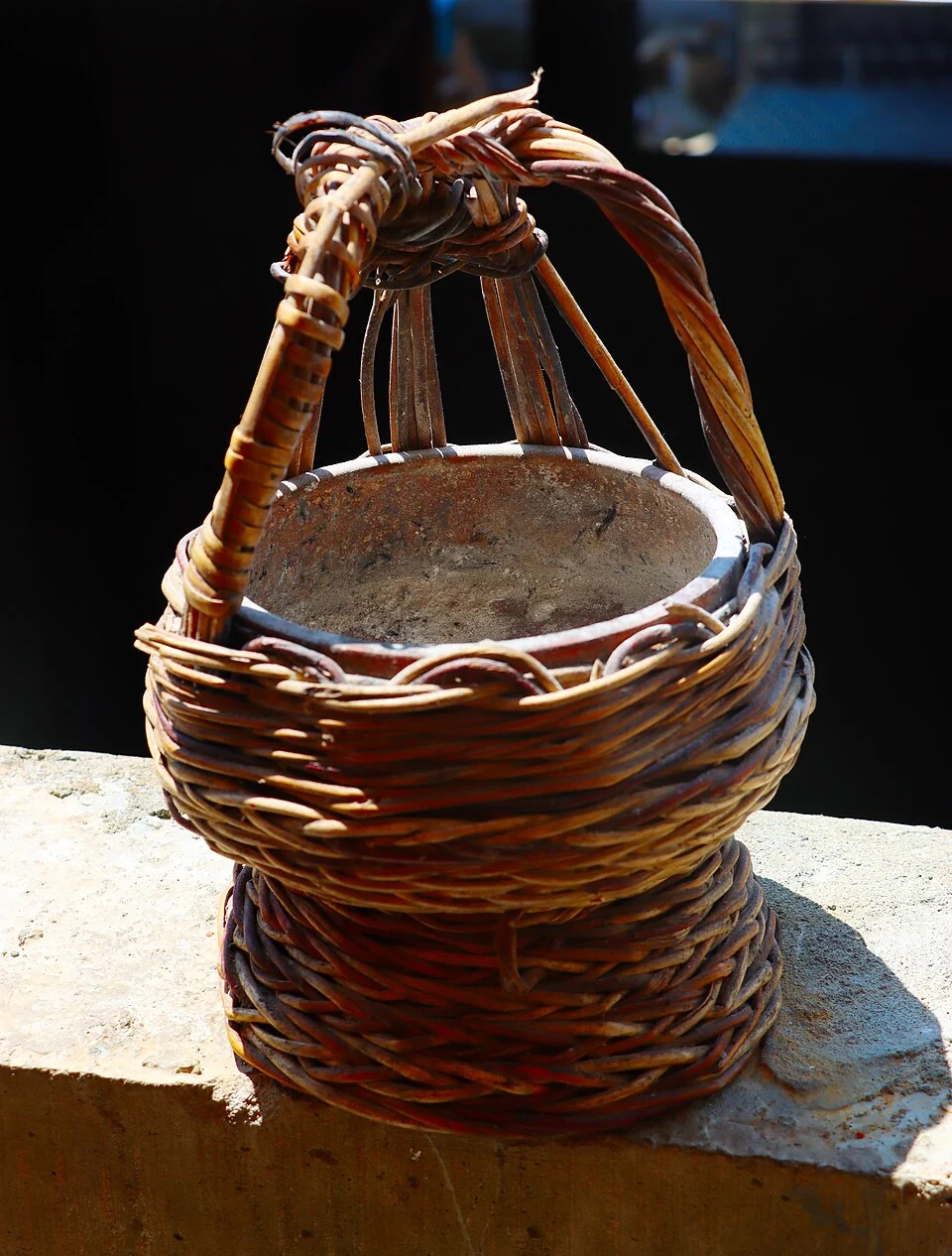
A kangri is a portable warming vessel associated with Kashmir, combining an earthenware bowl with a woven wicker surround. Charcoal provides heat within the bowl, while the outer structure supports handling and carrying. The object connects pottery, basketry and seasonal domestic practice. It is a practical artefact as well as a recognisable cultural symbol.[1]
Two materials, one object
The earthen component and the woven surround perform different roles. Their combination is therefore more informative than a description that treats the kangri simply as a basket or pot. Handles, opening, shape and the way the vessel sits affect its use, while decorative elements can vary between examples.[1]
An official craft and cultural description places the kangri within the region's material traditions. A dated object record is valuable because dimensions, weave and construction can differ. The photograph accompanying an entry represents one example, not a scale drawing or a standard specification for all kangris.[2]
Practice and seasonal meaning
The kangri is often discussed in relation to winter clothing and the pheran. That association explains a cultural setting without making every household's habits identical. An object's meaning includes how it is made, stored, carried and recognised, not only the energy source it contains.
A museum description, a maker's account and a household recollection can reveal different aspects of the same artefact. A maker may explain material choices, while a user may remember seasonal routines. Keeping these perspectives identifiable gives a richer account than turning a single anecdote into a universal custom.
This profile describes the object rather than giving instructions for burning fuel or placing a hot vessel against the body. Practical use involves heat and combustion and requires the appropriate advice for the actual situation. Cultural recognition should not be confused with a claim that every use is safe.
Compare Walnut Wood Carving and Papier-mâché for other material traditions. Noon Chai supplies another everyday cultural subject, helping keep domestic life visible beside the region's monumental heritage.
Photograph and map record
Photograph: Sanu N via Wikimedia Commons. Licence: CC BY-SA 4.0. Recorded capture date: 2021-08-18 12:37:37. Resized and converted to WebP; scene content unchanged. This is a dated view, not confirmation of the site’s present appearance.

Map marker: 34.083, 74.797. Editorial regional-context marker for Srinagar. This subject is not a single physical destination: the point is not a birthplace, workshop, harvest site, species range, guaranteed wildlife locality or boundary of language use. View location on OpenStreetMap · View Google Maps · Google directions · OpenStreetMap directions.
Research checked: 14 October 2026. For a visit, confirm current access, transport and opening information with the relevant authorities. This encyclopedia profile provides geographical and historical context.
Sources & references
[1] Kangri — secondary historical/geographical overview
https://en.wikipedia.org/wiki/Kangri ↗
[2] Budgam district: willow wicker and kangri craft
https://budgam.nic.in/tourism/culture-heritage/ ↗
Photograph and licence
https://commons.wikimedia.org/wiki/File:Kashmiri_Kangri.jpg ↗
Related reading

Aali Masjid: Open Ground and a Historic Srinagar Mosque
Aali Masjid, also written Ali Masjid, is a historic mosque in Srinagar's Eidgah area.

Amar Singh College: Education, Campus Heritage and Institutional Change
The growth of an educational institution from a technical institute, with campus conservation and academic resources.
Bakshi Stadium: Football and a Public Sports Venue in Srinagar
Bakshi Stadium is a major sports venue in Srinagar, particularly associated with football.