
Phugtal Monastery: Cave, Cliff and Monastic Life in Zanskar
Phugtal, also written Phuktal or Phugthar, is a Buddhist monastery in Zanskar's Lungnak valley.
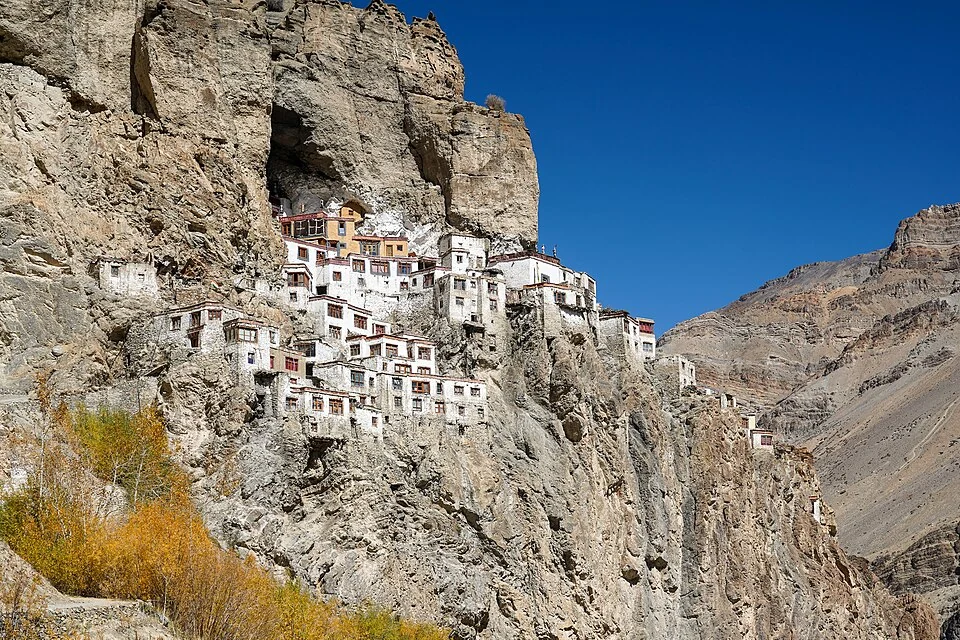
Phugtal, also written Phuktal or Phugthar, is a Buddhist monastery in Zanskar's Lungnak valley. Its buildings cluster around a large natural cave and a steep cliff setting, making the relationship between landform and architecture central to the site's identity. The monastery and the wider valley should not be reduced to one dramatic facade.[1]
Cave and cliff
Reference accounts associate the present monastic institution with the Gelug tradition and a fifteenth-century development, while traditions of earlier religious use concern a longer history of the cave. These should be distinguished: the age of a natural cavity is not the construction date of the buildings arranged around it.[1]
The official Zanskar tourism account identifies Phugtal among the region's important sites. Its inclusion supplies a geographical connection, not a current assessment of every walking approach or accommodation arrangement. Sources describing older road access need to retain their dates when used for practical planning.[2]
Architecture fitted to terrain
The cliff setting creates unusual spatial relationships. The cave, built rooms and routes between levels are visible in different ways from the valley and from within the complex. A distant photograph can reveal the whole arrangement more clearly than it reveals the construction details of individual rooms.
Access is consequently a separate question from identification. A point on a map may accurately locate the monastery without generating an appropriate walking route. Terrain, permission and current conditions require local confirmation. This entry describes the site rather than presenting an unsurveyed trek as a guaranteed visitor experience.
Compare Karsha, where buildings occupy a different hillside form, and Padum for the regional settlement context. Alchi offers a contrast with temple buildings in a village setting. Each site combines geography and religious history differently, which is why individual entries are more useful than a single undifferentiated description of Ladakh's monasteries.
Photograph and map record
Photograph: Timothy A. Gonsalves via Wikimedia Commons. Licence: CC BY-SA 4.0. Recorded capture date: 2022-10-08 12:39:07. Resized and converted to WebP; scene content unchanged. This is a dated view, not confirmation of the site’s present appearance.

Map marker: 33.26836381, 77.17954189. Representative source-record location, not a surveyed boundary or verified visitor entrance. Confirm actual access and accessibility locally. View location on OpenStreetMap · View Google Maps · Google directions · OpenStreetMap directions.
Research checked: 14 October 2026. For a visit, confirm current access, transport and opening information with the relevant authorities. This encyclopedia profile provides geographical and historical context.
Sources & references
[1] Phugtal Monastery — secondary historical/geographical overview
https://en.wikipedia.org/wiki/Phugtal_Monastery ↗
[2] Kargil district archive: Zanskar monasteries and landscape
https://kargil.nic.in/tourist-place/zanskar/ ↗
Photograph and licence
https://commons.wikimedia.org/wiki/File:Cave_Buildings_Phuktal_Gompa_Oct22_A7C_04465.jpg ↗
Related reading
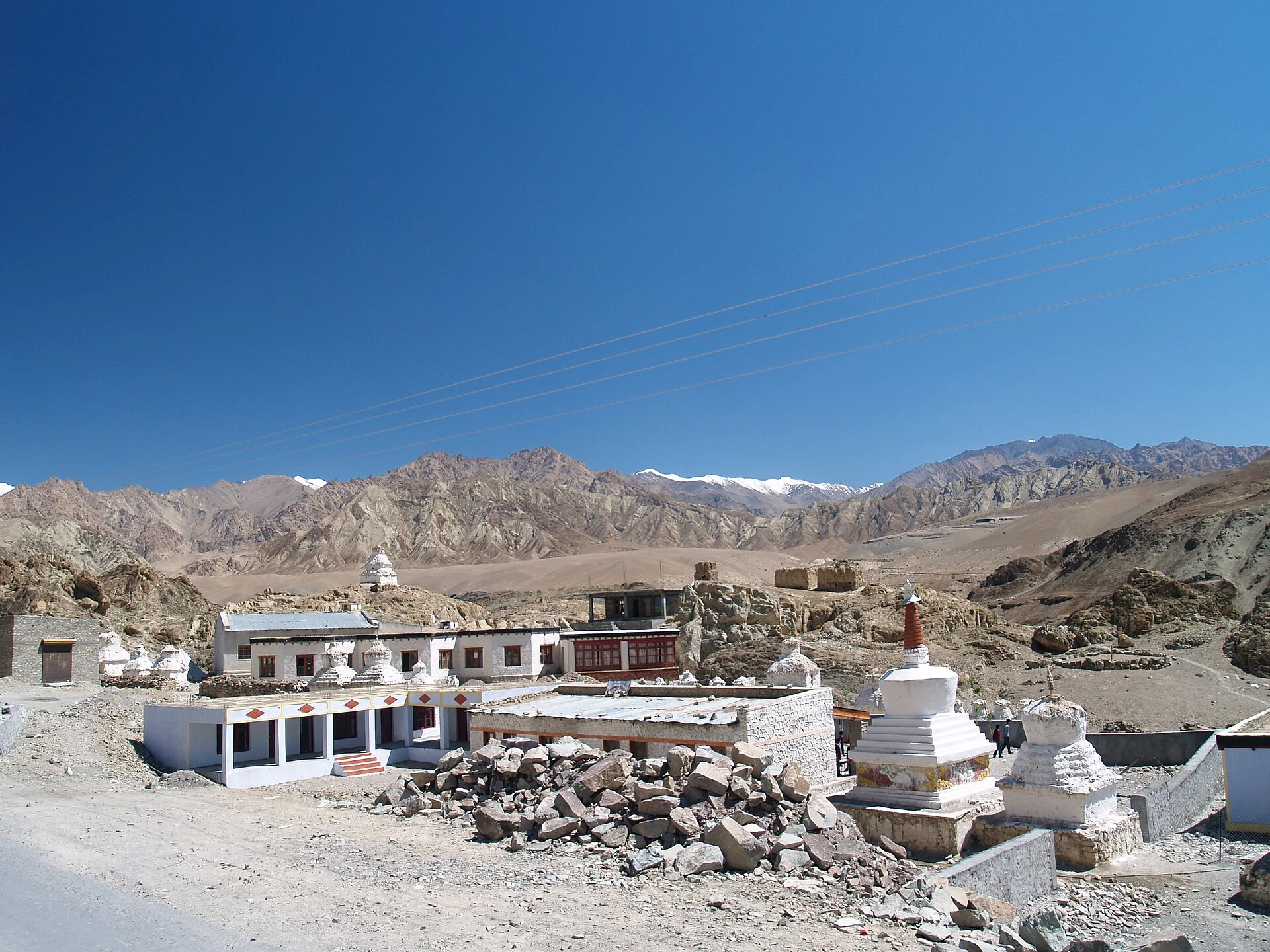
Alchi: Painted Temples and the Art of Western Himalayan Buddhism
Alchi is a Buddhist temple complex in the lower Indus valley, known especially for its painted interiors, sculpture and carved woodwork.
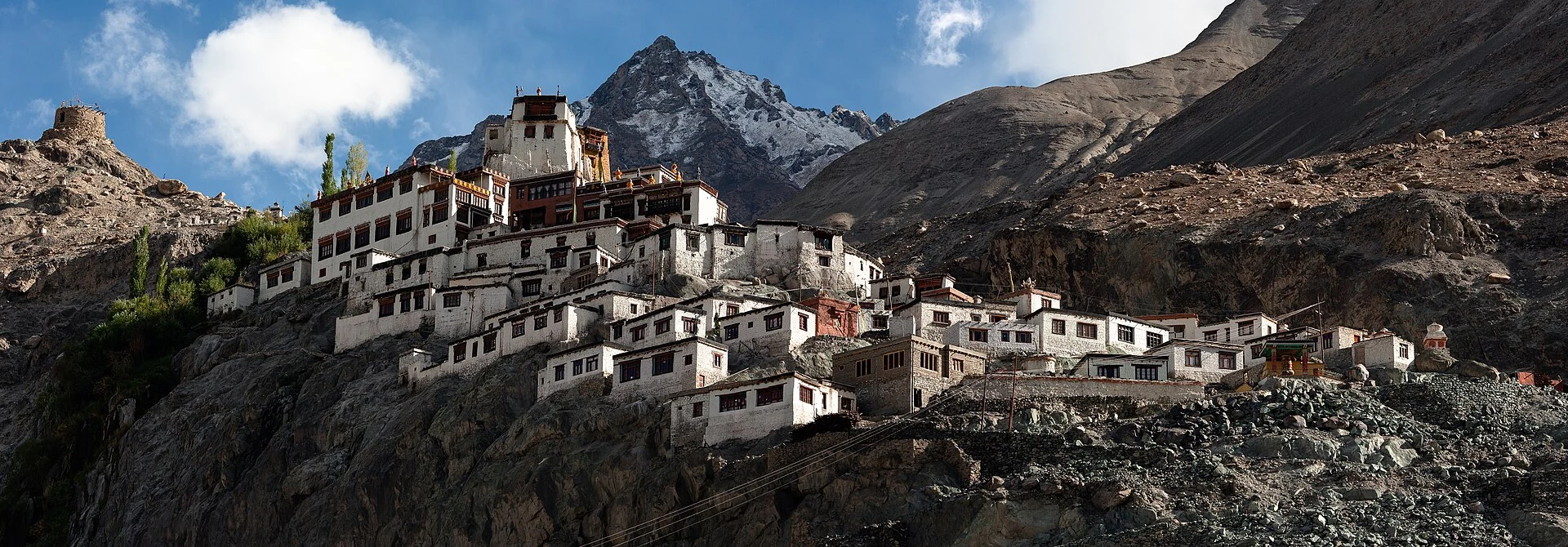
Diskit Monastery: Gelug Heritage and the Nubra Valley
Nubra’s Gelug monastery, hillside architecture, community life and the newer district classification.
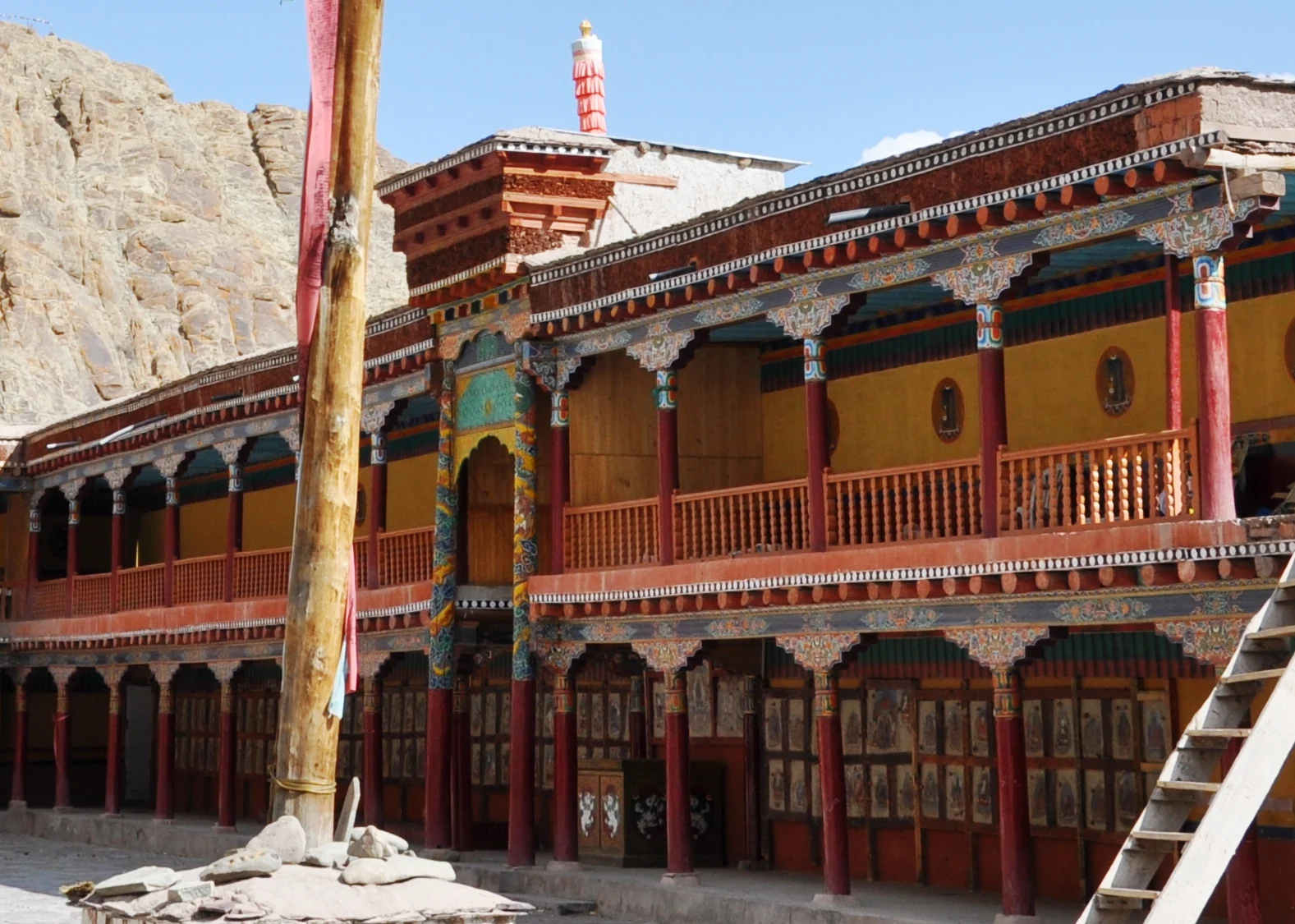
Hemis Monastery: Drukpa Heritage, Courtyard and Festival Traditions
Hemis as a living Buddhist institution, with royal associations, sacred art, courtyard use and the religious meanings of its annual festival.