
Alchi: Painted Temples and the Art of Western Himalayan Buddhism
Alchi is a Buddhist temple complex in the lower Indus valley, known especially for its painted interiors, sculpture and carved woodwork.
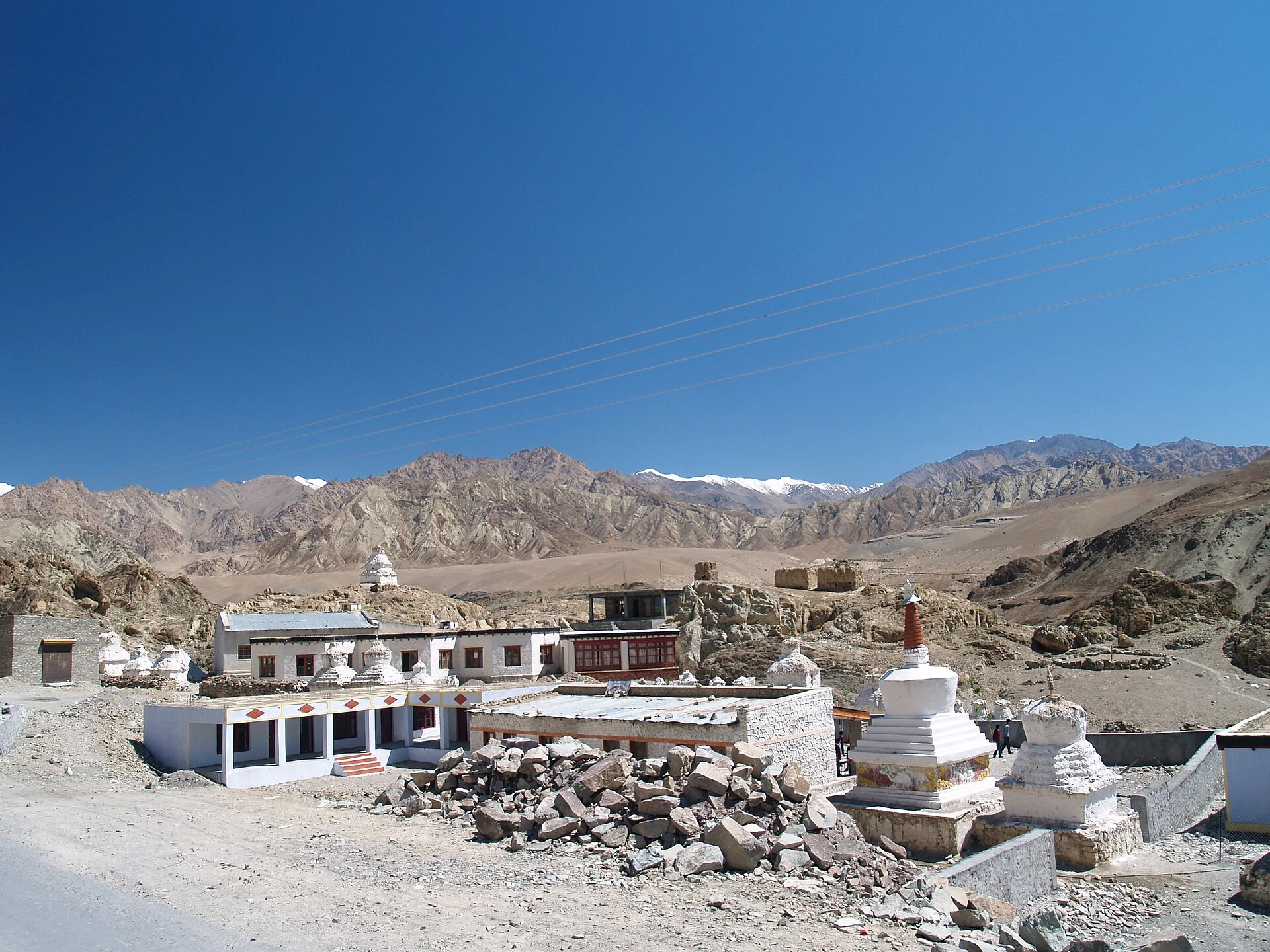
Alchi is a Buddhist temple complex in the lower Indus valley, known especially for its painted interiors, sculpture and carved woodwork. Unlike the conspicuous hilltop form of many Ladakhi monasteries, its monuments occupy a village setting. “Alchi monastery” is a convenient common name, but the complex contains several buildings with distinct histories. The Dukhang assembly hall, the Sumtsek and temples associated with Manjushri should not be treated as one structure built in a single campaign.[1]
Buildings, paintings and historical evidence
The older ASI monument inventory records Alchi's component shrines and its artistic importance. It is a useful official record of the monument group, although its broad historical dating does not resolve every question about individual buildings. Identifying the building is the first step before assigning a date, founder or artistic programme to it.[2]
Traditional accounts connect Alchi with the translator Rinchen Zangpo. Research based on inscriptions and the chronology of its paintings offers a more complicated account of patronage and construction. Christian Luczanits's Alchi publication presents updated study of the early remains, including work drawing on Jaroslav Poncar's photographic documentation. Tradition and inscription-based interpretation should therefore be presented as different kinds of evidence rather than forced into a single confident founding year.[3]
The painted figures reward close attention to gesture, costume, spatial arrangement and the relationship between an image and its architectural setting. A reproduction can make details easier to examine, but it removes the painting from the room in which it was designed to be seen. The building and the image illuminate each other; neither is merely background for the other.
A connected artistic landscape
Alchi's art is frequently discussed through connections with Kashmir and the western Himalaya. That is an art-historical relationship, not a reason to erase the complex's local setting or religious identity. Compare the stone architectural remains at Martand with Alchi's painted and carved interiors, while keeping chronology and medium separate.
The associated management history can be explored alongside Likir Monastery. Both Alchi and Likir fall within the Sham district framework notified in 2026. Older sources commonly use Leh district. Photography permissions, room access and conservation requirements should be confirmed locally; a dated exterior image does not imply unrestricted access to fragile interior paintings.
Photograph and map record
Photograph: Steve Hicks via Wikimedia Commons. Licence: CC BY 2.0. Recorded capture date: 2007-06-12 04:35:37. Resized and converted to WebP; scene content unchanged. This is a dated view, not confirmation of the site’s present appearance.

Map marker: 34.21666667, 77.16666667. Representative location from the secondary geographical record, not a surveyed boundary or verified visitor entrance. View location on OpenStreetMap · View Google Maps · Google directions · OpenStreetMap directions.
Research checked: 14 October 2026. For a visit, confirm current access, transport and opening information with the relevant authorities. This encyclopedia profile provides geographical and historical context.
Sources & references
[1] Alchi Monastery — secondary historical/geographical overview
https://en.wikipedia.org/wiki/Alchi_Monastery ↗
[2] ASI inventory hosted by IGNCA: Buddhist monasteries at Alchi
https://ignca.gov.in/Asi_data/83540.pdf ↗
[3] Christian Luczanits: Alchi research publication and early remains
https://luczanits.net/publications/alchi_book.html ↗
Photograph and licence
Related reading
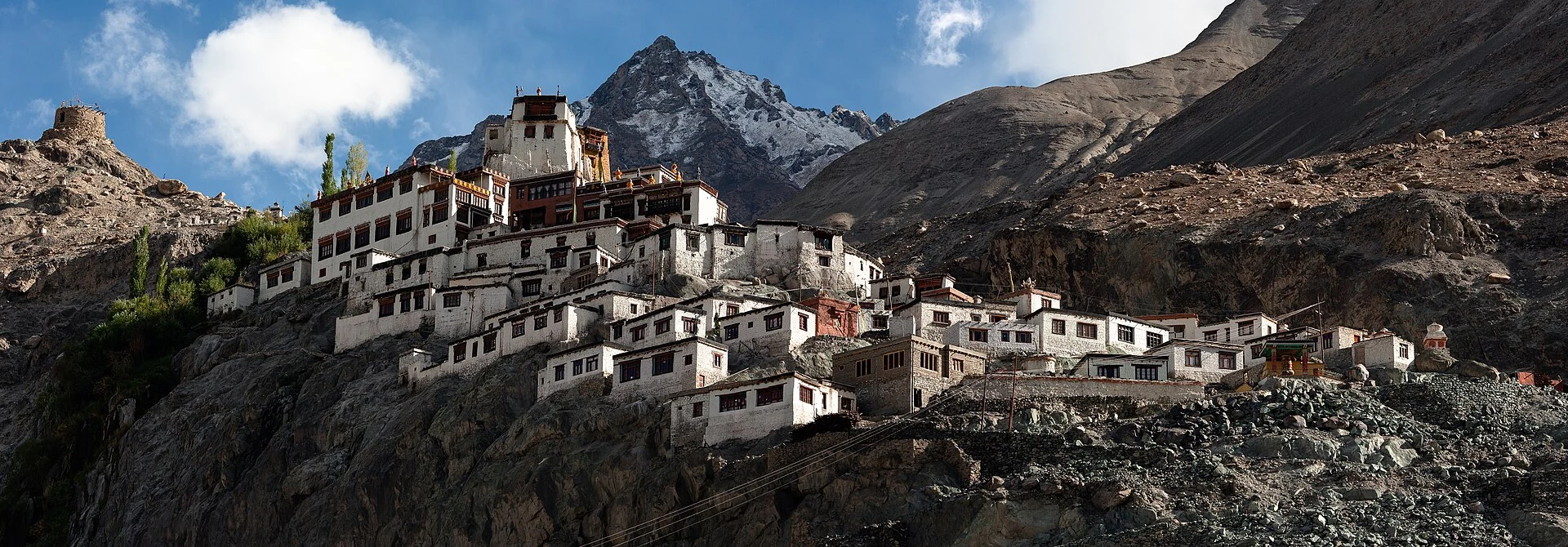
Diskit Monastery: Gelug Heritage and the Nubra Valley
Nubra’s Gelug monastery, hillside architecture, community life and the newer district classification.
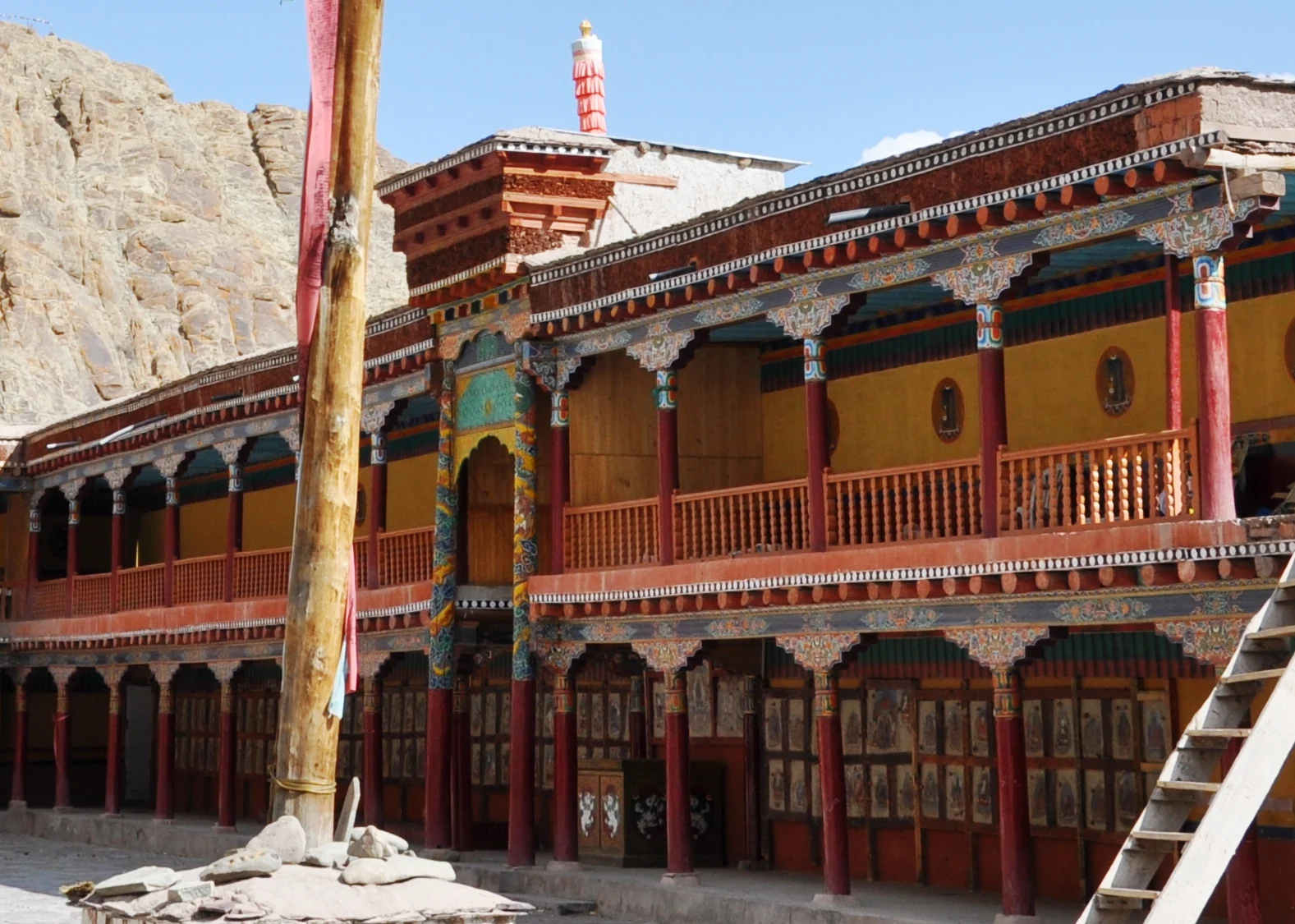
Hemis Monastery: Drukpa Heritage, Courtyard and Festival Traditions
Hemis as a living Buddhist institution, with royal associations, sacred art, courtyard use and the religious meanings of its annual festival.
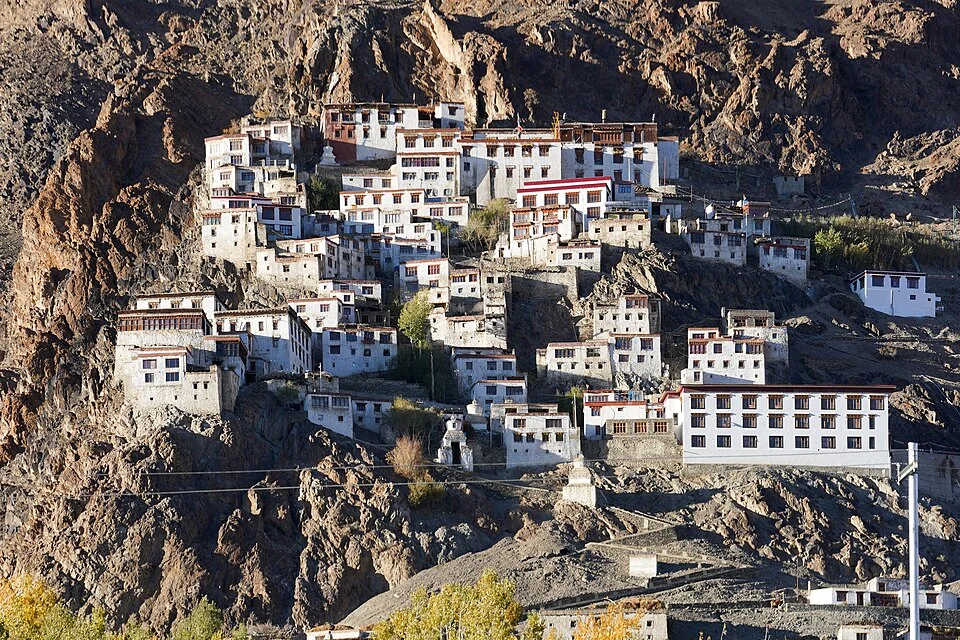
Karsha Monastery: Buddhist Community above the Zanskar Valley
Karsha is a major Buddhist monastery above the Zanskar valley near Padum.