
Pratap Singh: Ruler and Institutional Change in Jammu and Kashmir
Pratap Singh was Maharaja of Jammu and Kashmir from 1885 until 1925. A ruler of the Dogra dynasty, he succeeded Ranbir Singh and was followed by his nephew Hari Singh. His long reign spans a period of administrative and institutional change under the princely state's relationship with British paramountcy.
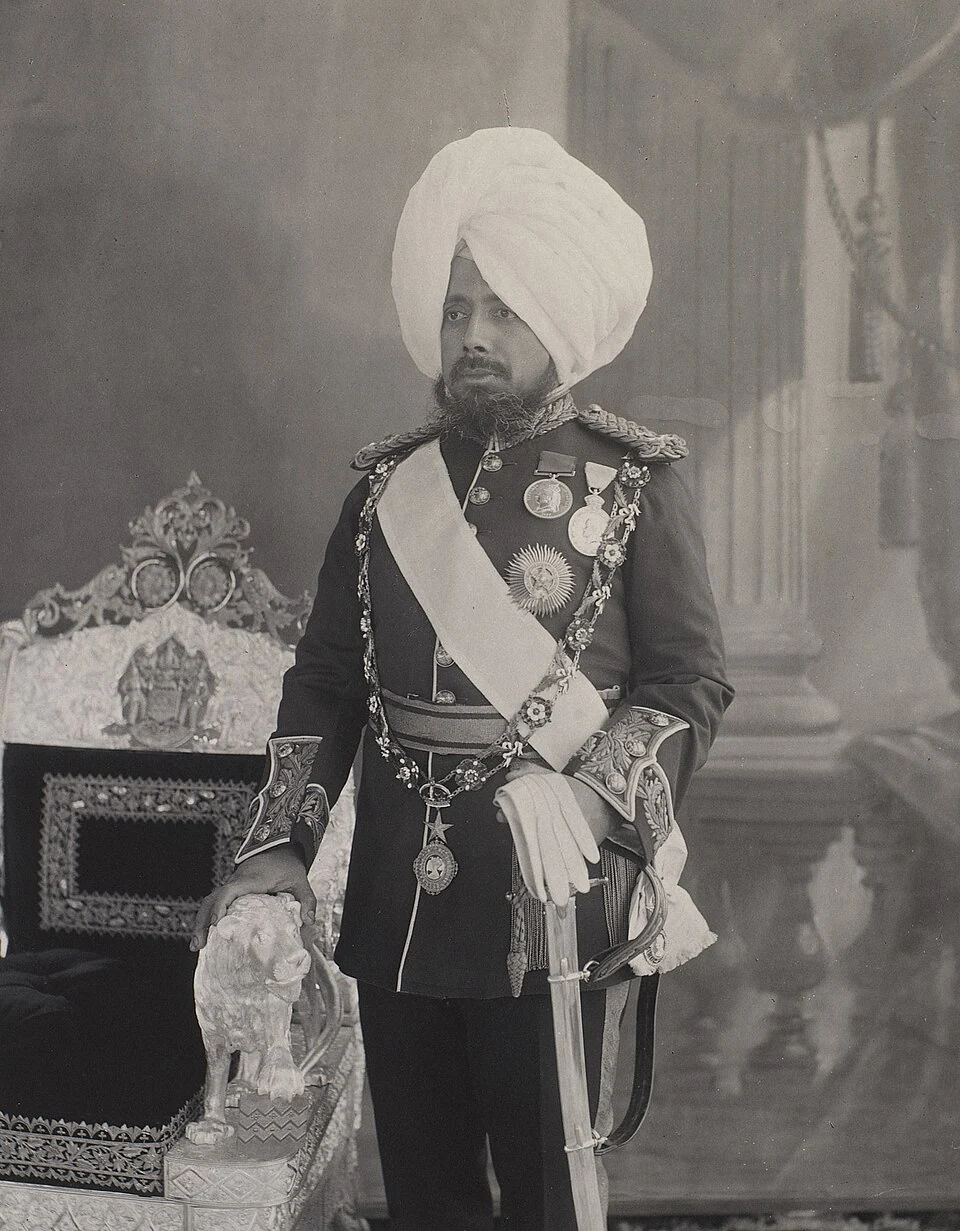
Pratap Singh was Maharaja of Jammu and Kashmir from 1885 until 1925. A ruler of the Dogra dynasty, he succeeded Ranbir Singh and was followed by his nephew Hari Singh. His long reign spans a period of administrative and institutional change under the princely state's relationship with British paramountcy.[1]
Dynasty and institutions
The Dharmarth Trust's own history identifies Pratap Singh within the succession of rulers responsible for its administration. That is evidence for the trust's institutional narrative, not an inventory of every religious establishment or a complete account of the state's government.[2]
Education offers another way to investigate the period. Srinagar's Sri Pratap College preserves his name in its institutional identity. A college history can connect a named ruler with a particular foundation while also recording the teachers, administrators and students who developed the institution.[3]
Change during a long reign
A period lasting several decades should not be treated as one unchanging moment. Policies, officials and relationships with British representatives changed over time. A dated act, appointment or construction record gives a more precise explanation than a broad statement that every improvement was the personal work of the monarch.
Historical portraits provide information about representation, dress and ceremony. They do not independently establish the effect of a policy on everyday life. For that question, reports, institutional records and accounts from those affected offer different kinds of evidence.
Pratap Singh's biography also illustrates why names must be checked carefully. Several South Asian rulers shared the name, and a search result or portrait labelled only “Pratap Singh” can refer to a different person. The regional and dynastic identification should stay in the article title, caption and bibliography.
Read Sri Pratap College, Hari Singh and Mubarak Mandi for connected institutional, dynastic and architectural histories. Their dates and subjects remain separate even where their names intersect. The Jammu marker is a regional context point; it is not a verified royal residence, grave or the site of every event in the reign.
Image and map record
Image: Bourne & Shepherd via Wikimedia Commons. Licence: Public domain. Recorded capture date: 1903. Resized and converted to WebP; image content unchanged. This is a dated view, not confirmation of the site’s present appearance.


Map marker: 32.733, 74.867. Editorial regional-context marker. This biography, craft or cultural tradition is not a single physical destination. The point is not a verified birthplace, residence, workshop, exclusive origin, performance venue or cultural boundary. View location on OpenStreetMap · View Google Maps · Google directions · OpenStreetMap directions.
Research checked: 14 October 2026. For a visit, confirm current access, transport and opening information with the relevant authorities. This encyclopedia profile provides geographical and historical context.
Sources & references
[1] Reference overview: Pratap Singh of Jammu and Kashmir
https://en.wikipedia.org/wiki/Pratap_Singh_of_Jammu_and_Kashmir ↗
[2] Dharmarth Trust: institutional history
https://jkdharmarthtrust.org/History.aspx ↗
[3] Sri Pratap College: institutional website and history
Image and licence
Related reading
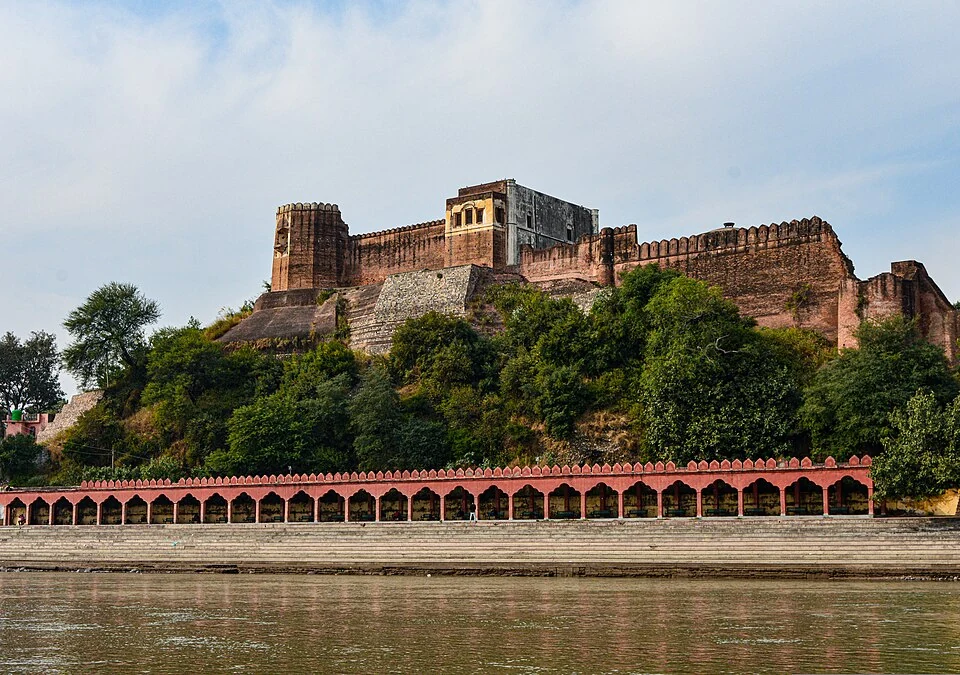
Akhnoor Fort: Built Heritage beside the Chenab
Akhnoor Fort stands beside the Chenab in Jammu district. Its fortified walls and palace spaces belong to the built history of Akhnoor, while the river
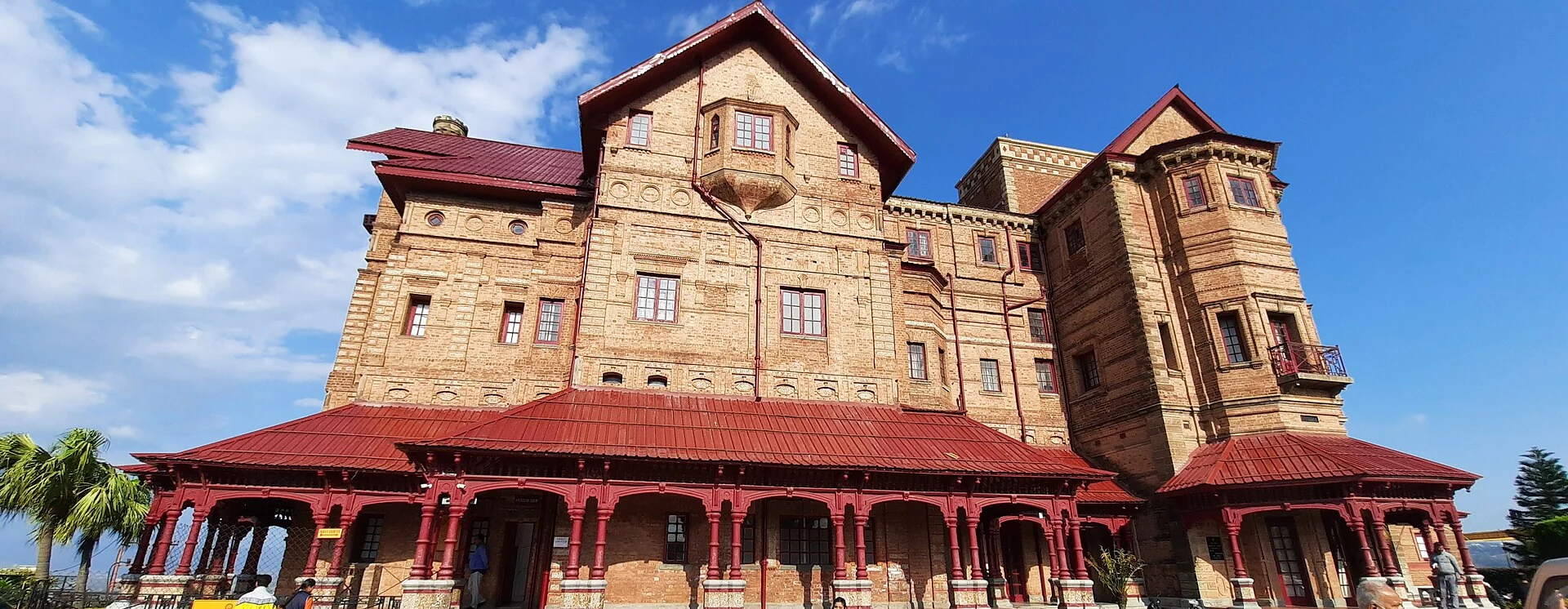
Amar Mahal: Palace Architecture and a Museum in Jammu
A nineteenth-century palace’s architecture, differing published dates and later role as a public museum.
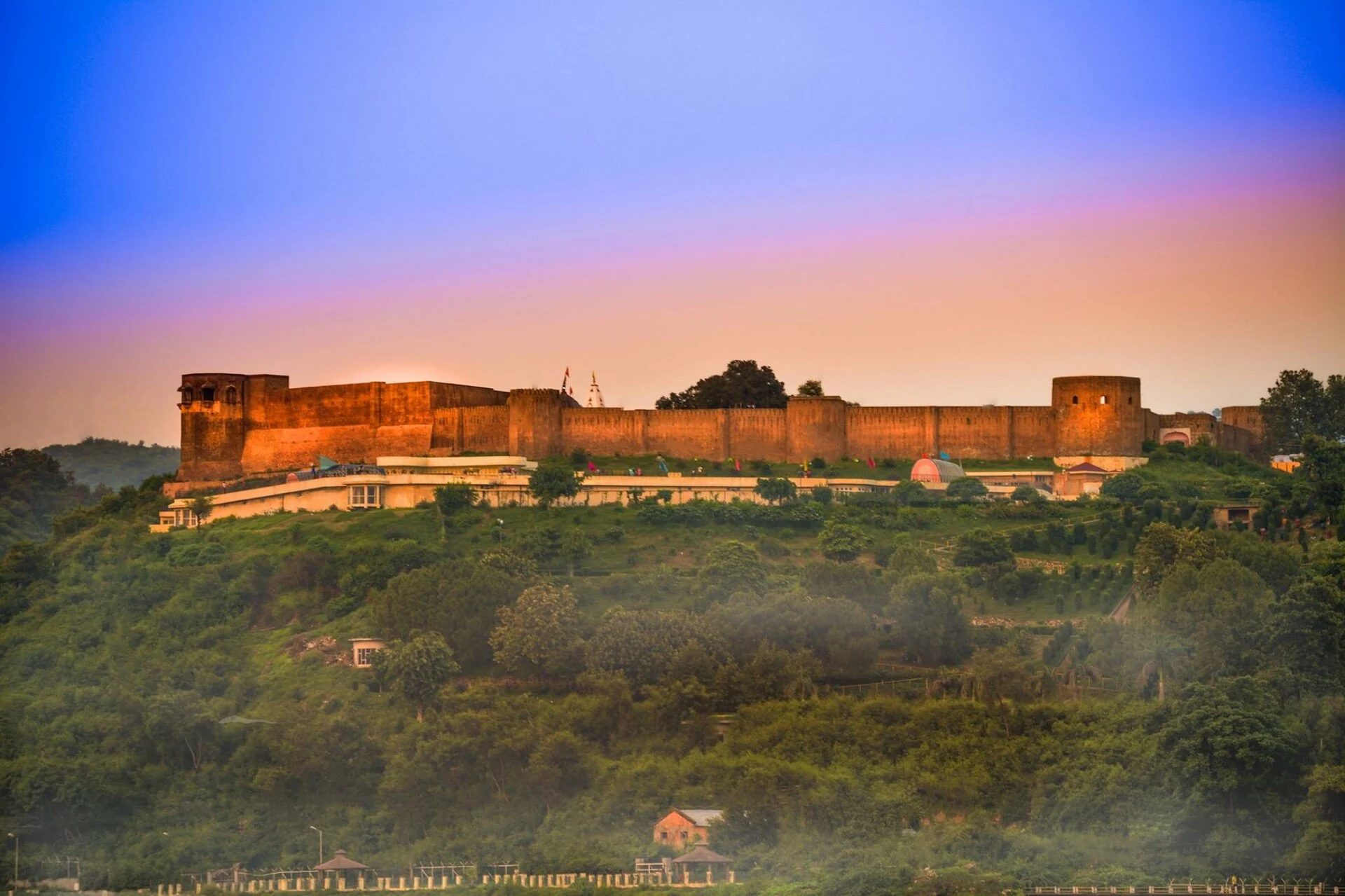
Bahu Fort: Jammu’s Riverside Fortification and Sacred Precinct
A fortified setting above the Tawi with a living Kali shrine and adjoining garden landscape.