
Ramnagar Palace: Courtly Architecture in the Jammu Hills
Ramnagar Palace is a historic palace complex in the Udhampur district of the Jammu region. It must be distinguished from the much better-known Ramnagar Fort and palace at Varanasi. The shared place name is a frequent source of misleading photographs, captions and map results.
Ramnagar Palace is a historic palace complex in the Udhampur district of the Jammu region. It must be distinguished from the much better-known Ramnagar Fort and palace at Varanasi. The shared place name is a frequent source of misleading photographs, captions and map results.[1]
A Jammu-region palace
The Archaeological Survey of India's protected-monument list identifies ancient palaces at Ramnagar attributed to Raja Suchet Singh. It lists the nearby fort separately. That distinction establishes two related monuments rather than one interchangeable “fort-palace” entry.[2]
Accounts of Ramnagar connect the nineteenth-century palace buildings with Suchet Singh and later additions associated with Ram Singh. The town's courtly history provides context for halls, courtyards and decorated interiors. Individual rooms and painting schemes need their particular dating rather than a single founding date applied to the whole complex.[1]
Architecture and interior evidence
A palace compound can contain residential, ceremonial and service spaces. Their arrangement helps explain court life more precisely than treating every room as an identical royal chamber.
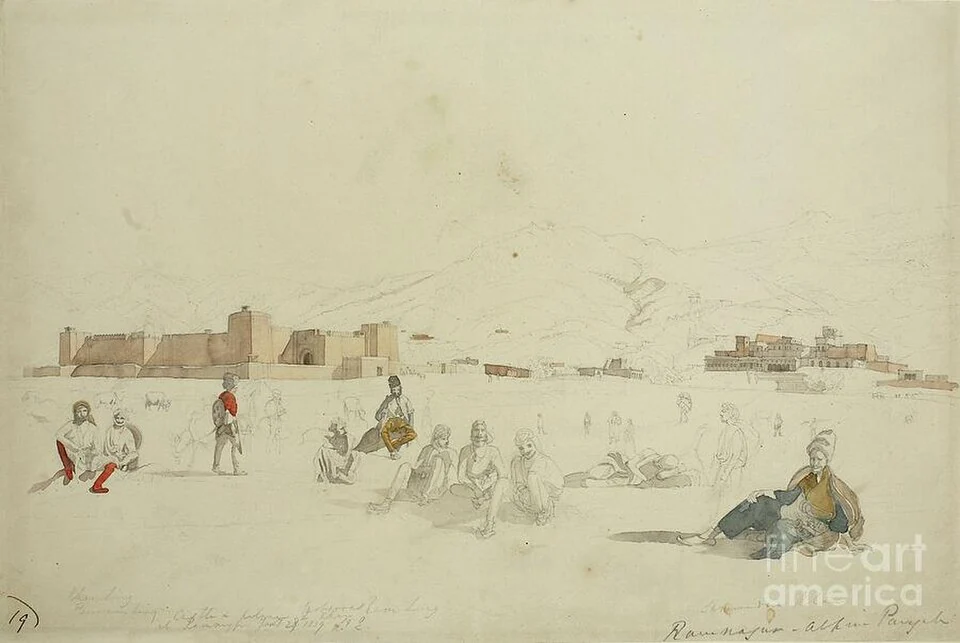
The local heritage presentation includes the Sheesh Mahal among Ramnagar's attractions. Interior decoration is an important part of the palace's identity, but a distant exterior illustration cannot document the condition of its paintings. Plans and close records answer different questions from a broad landscape view.[3]
The image supplied with this article is a nineteenth-century watercolour attributed to Godfrey Thomas Vigne, showing the Ramnagar castle and palace setting. It is a historical artistic record, not a contemporary photograph or a guarantee that every depicted structure survives unchanged.
Compare Mubarak Mandi, a larger Jammu palace complex, and Basohli Painting for a different court-related visual tradition. Udhampur supplies the district-headquarters context. These links explain regional relationships without confusing separate places or painting schools. The map uses Ramnagar-town orientation until an exact palace entrance is independently verified. The monument listing does not itself establish present visiting hours or unrestricted access to decorated interiors.
Image and map record
Image: Godfrey Thomas Vigne via Wikimedia Commons. Licence: Public domain. Recorded capture date: 1839. Resized and converted to WebP; image content unchanged. This is a dated view, not confirmation of the site’s present appearance.


Map marker: 32.82, 75.32. Ramnagar-town context marker from the settlement record; exact palace visitor entrance not verified. This is Ramnagar in Udhampur, not Varanasi. View location on OpenStreetMap · View Google Maps · Google directions · OpenStreetMap directions.
Research checked: 14 October 2026. For a visit, confirm current access, transport and opening information with the relevant authorities. This encyclopedia profile provides geographical and historical context.
Sources & references
[1] Reference overview: Ramnagar, Udhampur
https://en.wikipedia.org/wiki/Ramnagar%2C_Udhampur ↗
[2] Archaeological Survey of India: centrally protected monument list
https://asi.nic.in/pdf/CPM_List.pdf ↗
[3] Udhampur administration: Ramnagar and Sheesh Mahal context
https://udhampur.nic.in/tourist-place/ramnagar-fort/ ↗
Image and licence
Related reading
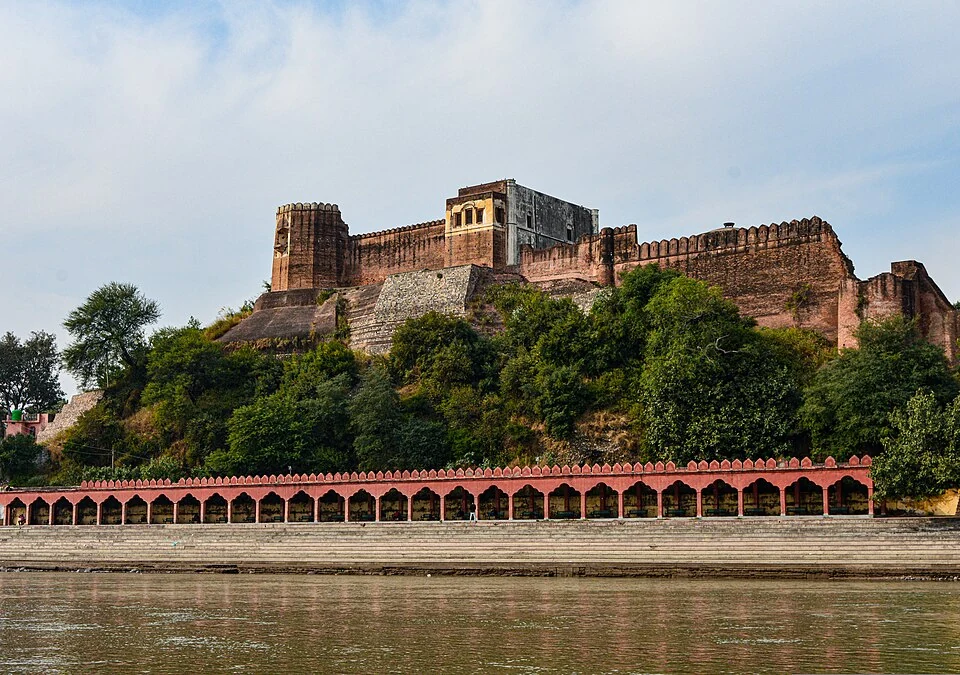
Akhnoor Fort: Built Heritage beside the Chenab
Akhnoor Fort stands beside the Chenab in Jammu district. Its fortified walls and palace spaces belong to the built history of Akhnoor, while the river
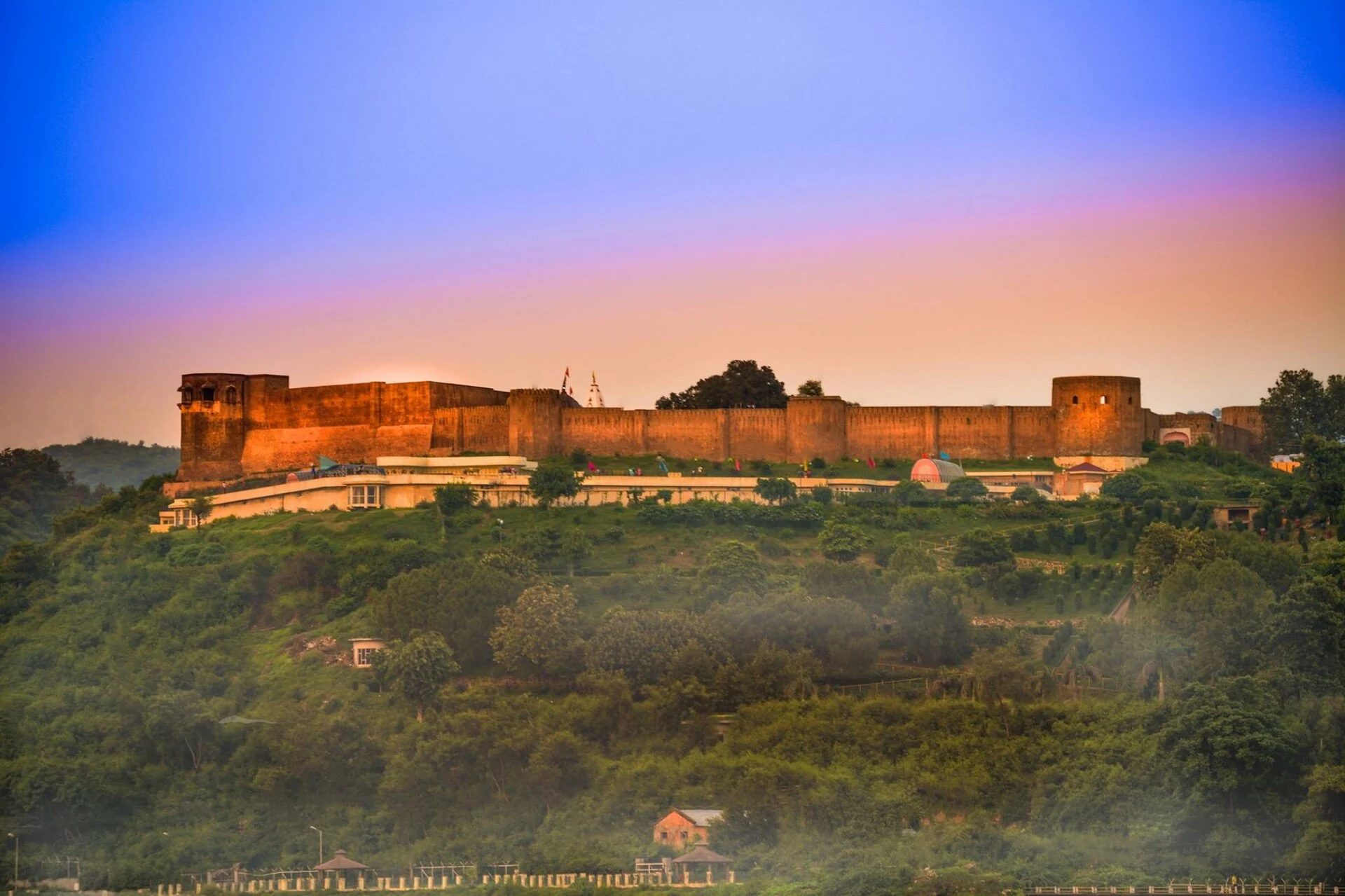
Bahu Fort: Jammu’s Riverside Fortification and Sacred Precinct
A fortified setting above the Tawi with a living Kali shrine and adjoining garden landscape.
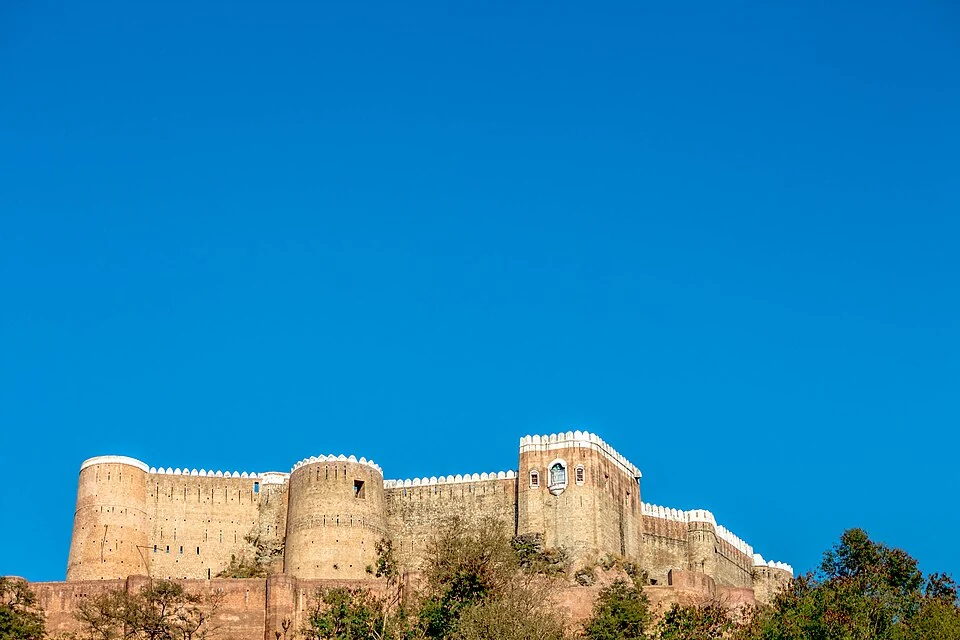
Bhimgarh Fort: A Hilltop Landmark above Reasi
Bhimgarh Fort, also called Reasi Fort, is a hilltop monument above Reasi in the Jammu region. Its elevated position distinguishes it from forts arrang