
Sozni: Needlework and the Surface of Kashmiri Shawls
Sozni, also written sozani or sozani embroidery, is a Kashmiri needlework tradition especially associated with shawls and other fine textiles. It creates decoration through stitching on an existing cloth surface. The distinction from weaving is fundamental: an embroidered pattern is added by a needle, while a woven pattern is formed during the making of cloth.
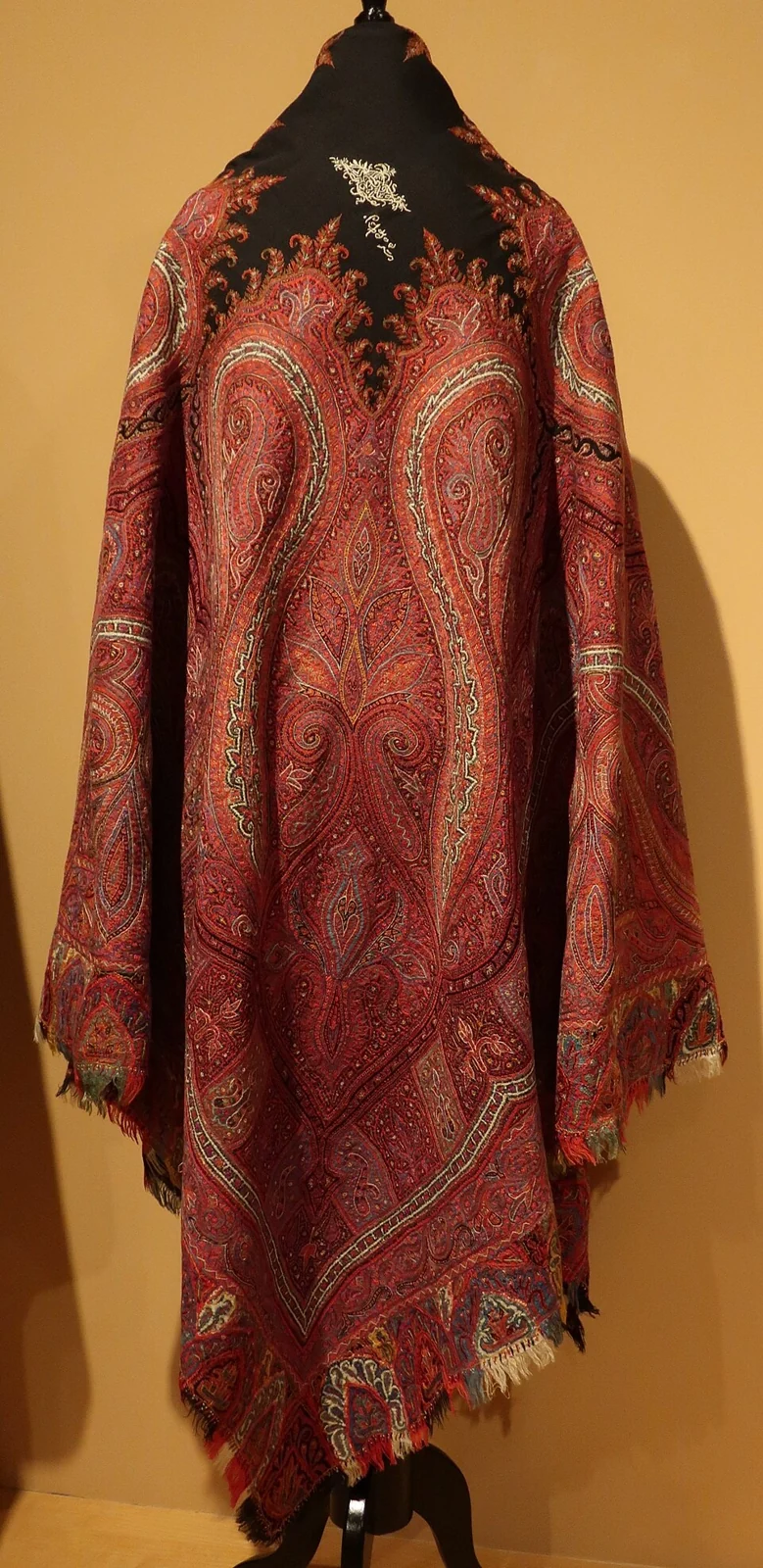
Sozni, also written sozani or sozani embroidery, is a Kashmiri needlework tradition especially associated with shawls and other fine textiles. It creates decoration through stitching on an existing cloth surface. The distinction from weaving is fundamental: an embroidered pattern is added by a needle, while a woven pattern is formed during the making of cloth.[1]
Needle, thread and design
The Development Commissioner for Handicrafts presents Kashmir Sozani as a regional craft. Floral and other repeated motifs can be arranged along borders or across a larger surface. The density and placement of stitching affect the visual balance between the original ground fabric and the added design.[1]
CBSE's instructional material on Kashmiri embroidery introduces Sozni within practical textile learning. It supplies a route into tools and techniques rather than merely a finished-product description. An artisan's planning and control of stitches are part of the work even when the finished surface looks effortless.[2]
Technique and material are different terms
Pashmina describes a fibre-related textile category, while Sozni describes an embroidery technique. A garment or shawl can combine them, but the embroidery alone does not establish fibre composition. Similarly, a delicate appearance is not independent proof that every stage was carried out by hand.
Documentation of a particular piece is strongest when it records the maker, fabric, thread, technique and date. Close views can show individual stitches, while a broader view reveals the design's arrangement. Both are useful; neither replaces the provenance of the object.
The Central Asian word suzani appears in searches for a different family of embroidered textiles. Similar spellings should not lead to labelling an Uzbek wall hanging as Kashmiri Sozni. A source caption and technical identification are needed before an illustration is assigned to the craft.
Read Kashmir Pashmina, Pheran and Kashmir Carpets to distinguish fibre, garment form and another textile-making process. The map is a Srinagar context marker, not the location of a named embroiderer or an exclusive production boundary. The image caption identifies the actual illustrated textile and its source status.
Image and map record
Image: Hiart via Wikimedia Commons. Licence: CC0. Recorded capture date: photo 2018. Resized and converted to WebP; image content unchanged. This is a dated view, not confirmation of the site’s present appearance.

Map marker: 34.083, 74.797. Editorial regional-context marker. This biography, craft or cultural tradition is not a single physical destination. The point is not a verified birthplace, residence, workshop, exclusive origin, performance venue or cultural boundary. View location on OpenStreetMap · View Google Maps · Google directions · OpenStreetMap directions.
Research checked: 14 October 2026. For a visit, confirm current access, transport and opening information with the relevant authorities. This encyclopedia profile provides geographical and historical context.
Sources & references
[1] Development Commissioner Handicrafts: Kashmir Sozani craft
[2] CBSE: Kashmiri embroidery instructional material
https://cbseacademic.nic.in/web_material/Curriculum24/publication/KashmiriEmbroidery8.pdf ↗
Image and licence
Related reading

Aali Masjid: Open Ground and a Historic Srinagar Mosque
Aali Masjid, also written Ali Masjid, is a historic mosque in Srinagar's Eidgah area.

Agha Shahid Ali: Poetry, Memory and Kashmir
Agha Shahid Ali was a Kashmiri-American poet who lived from 1949 to 2001. Born in New Delhi and raised in a family associated with Kashmir, he develop

Amar Singh College: Education, Campus Heritage and Institutional Change
The growth of an educational institution from a technical institute, with campus conservation and academic resources.