
Pheran: Clothing, Season and Kashmiri Everyday Life
The pheran, also written phiran, is a loose outer garment associated with Kashmir. It is worn by women and men, with differences in fabric, cut and decoration. Its importance lies both in practical clothing and in regional identity: a familiar silhouette can communicate belonging without requiring every wearer to dress in an identical way.
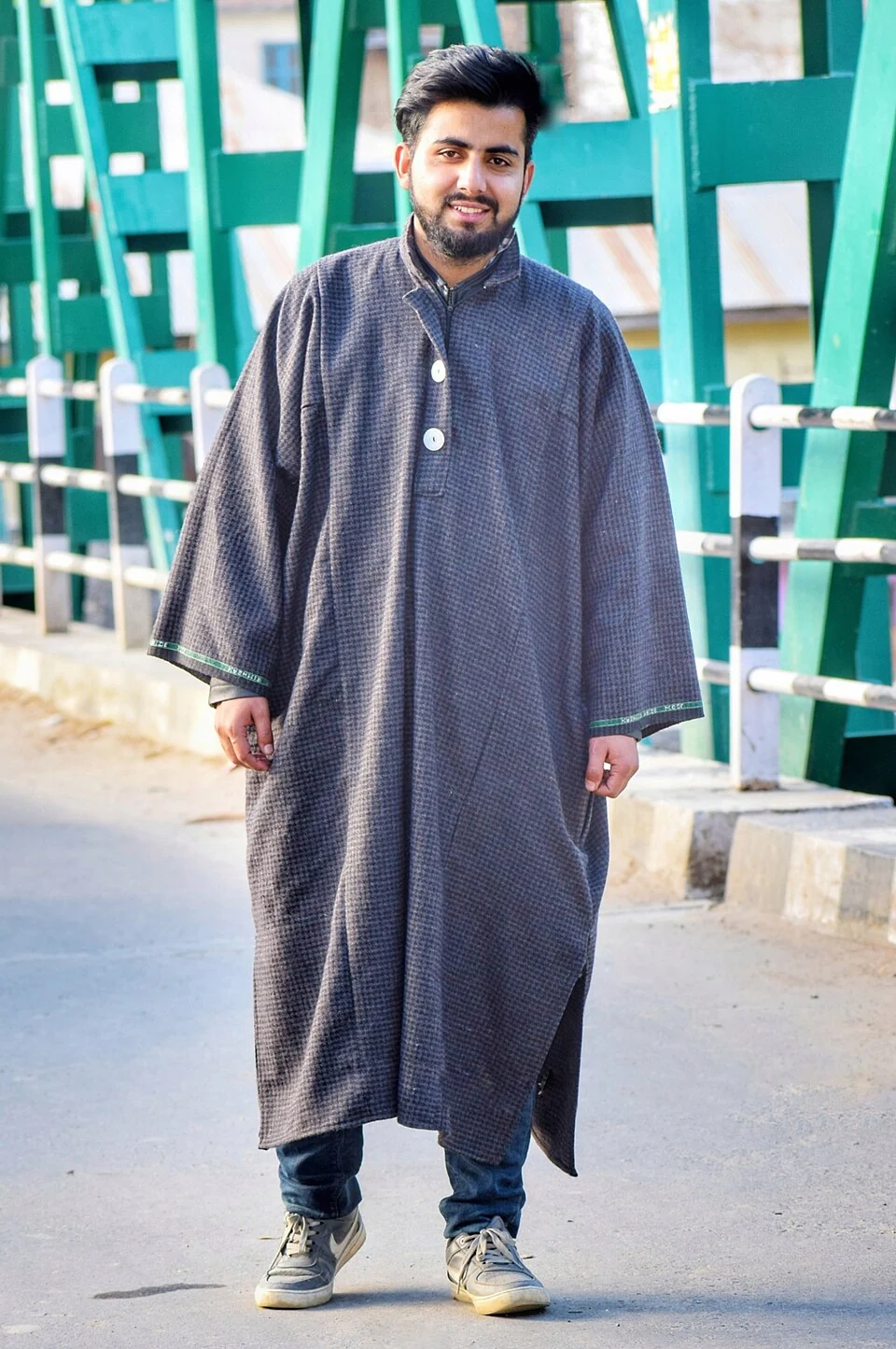
The pheran, also written phiran, is a loose outer garment associated with Kashmir. It is worn by women and men, with differences in fabric, cut and decoration. Its importance lies both in practical clothing and in regional identity: a familiar silhouette can communicate belonging without requiring every wearer to dress in an identical way.[1]
Fabric and season
A government cultural account distinguishes thick woollen winter pherans from cotton garments used in warmer weather. That seasonal distinction helps explain why the name refers to a clothing form rather than one fixed textile. Fabric weight, lining and embroidery change the appearance and use of a particular garment.[2]
The loose cut is also associated with the traditional kangri. The two objects belong in connected accounts of winter life, but a garment description is not an instruction for carrying a live heat source. Clothing, fuel and indoor heating practices have changed over time.[1]
Dress and individual expression
A useful description starts with the actual garment: its length, sleeves, neckline, cloth and embellishment. A formal embroidered example and an everyday working garment may share the name while serving different occasions. Close photographs can make those distinctions clearer than a single generic costume label.
The pheran should also be understood as contemporary clothing, rather than only as an item placed in a heritage display. People adapt familiar forms to new fabrics, tastes and situations. A photograph records one choice made by one wearer; it cannot represent every age group, household or community in the valley.
For textile context, read Sozni Embroidery and Kashmir Pashmina. Embroidery is a surface technique, pashmina is a fibre-related textile description, and pheran is a garment form. Keeping these terms separate helps explain how a finished object can combine several kinds of craft knowledge. The map is a Srinagar context marker, not a claim that pherans originate in one street or can be bought only at one shop.
Image and map record
Image: AlKashmiri via Wikimedia Commons. Licence: CC BY-SA 4.0. Recorded capture date: 2018-12-29 23:35:59. Resized and converted to WebP; image content unchanged. This is a dated view, not confirmation of the site’s present appearance.

Map marker: 34.083, 74.797. Editorial regional-context marker. This biography, craft or cultural tradition is not a single physical destination. The point is not a verified birthplace, residence, workshop, exclusive origin, performance venue or cultural boundary. View location on OpenStreetMap · View Google Maps · Google directions · OpenStreetMap directions.
Research checked: 14 October 2026. For a visit, confirm current access, transport and opening information with the relevant authorities. This encyclopedia profile provides geographical and historical context.
Sources & references
[1] Reference overview: Pheran
https://en.wikipedia.org/wiki/Pheran ↗
[2] Press Information Bureau: Kashmir cultural account
https://www.pib.gov.in/newsite/erelcontent.aspx?lang=2®=48&relid=116916 ↗
Image and licence
Related reading

Aali Masjid: Open Ground and a Historic Srinagar Mosque
Aali Masjid, also written Ali Masjid, is a historic mosque in Srinagar's Eidgah area.
Agha Shahid Ali: Poetry, Memory and Kashmir
Agha Shahid Ali was a Kashmiri-American poet who lived from 1949 to 2001. Born in New Delhi and raised in a family associated with Kashmir, he develop

Amar Singh College: Education, Campus Heritage and Institutional Change
The growth of an educational institution from a technical institute, with campus conservation and academic resources.