
University of Kashmir: Hazratbal Campus and the Growth of Higher Education
The university’s 1948 origins, 1969 reorganisation, Hazratbal campus and academic information resources.
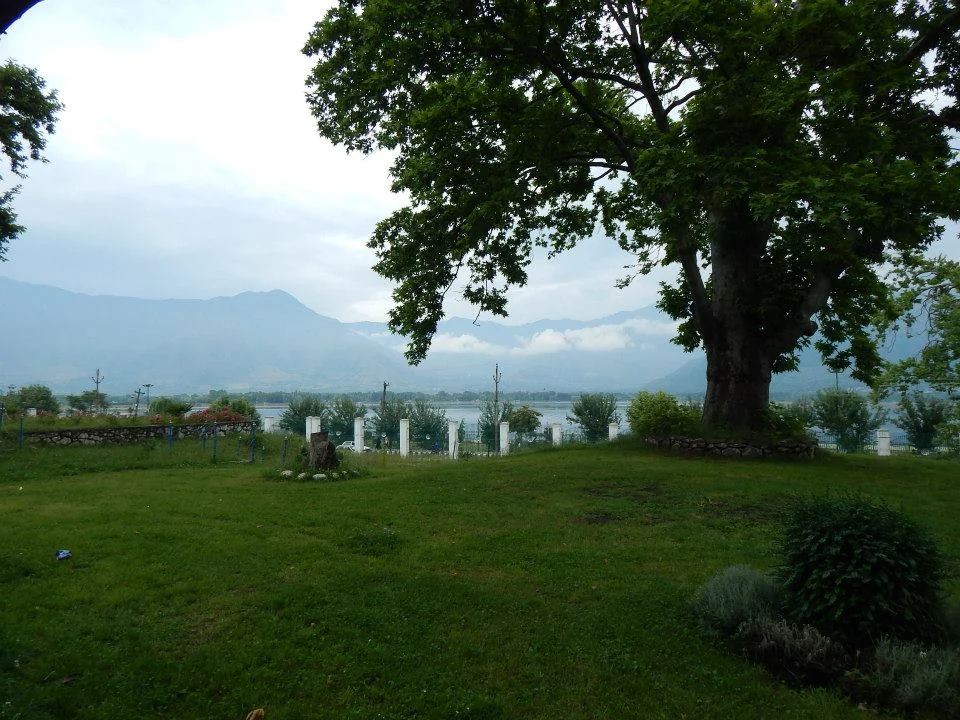
The University of Kashmir is a public university based at Hazratbal in Srinagar. Its own institutional history begins with the University of Jammu and Kashmir in 1948 and records the division into separate universities at Srinagar and Jammu in 1969. These two dates refer to different stages of institutional development. The present university therefore has a history rooted in the earlier shared institution without making the 1969 change irrelevant.[1]
The Hazratbal setting
The university’s official overview describes the main campus in relation to Dal Lake and Nigeen Lake. The landscape gives the institution a distinctive city setting, near the Hazratbal neighbourhood rather than in the central commercial streets of Srinagar. The campus is not itself a lake attraction; its primary purpose is teaching and research within that wider urban and waterside environment.[1]
The secondary institutional account identifies several adjacent campus areas, including Naseem Bagh. These names preserve a relationship with the city’s earlier garden and estate geography. A university campus can incorporate inherited landscape features while changing their use through classrooms, offices, research spaces and student movement.[2]
Teaching, research and the wider institution
The university publishes information across a range of disciplines, from humanities and social sciences to scientific and professional fields. The secondary profile records undergraduate, postgraduate and doctoral education within its wider structure. A course list is nevertheless time-sensitive: an institutional overview should not be treated as a guarantee that a particular programme is admitting students in the current session.[2]
The official website provides separate routes to admissions, examinations, research and distance education. Those channels reflect different functions rather than duplicate descriptions of one office. A student seeking an examination notice needs a different record from a researcher looking for a departmental project or a visitor trying to identify the main campus.[1]
The library as an academic resource
The Allama Iqbal Library’s own account describes its collections and contributions to wider information initiatives, including repositories for manuscripts and theses. This makes the library more than an accessory to teaching buildings. It is an institutional resource through which research can be preserved, discovered and connected with material held elsewhere.[3]
Collections in print, manuscript holdings and digital repositories are different forms of academic evidence. A catalogue record can identify a work without making every item freely available online, and a contribution to a national repository does not imply that the whole library has been digitised. These distinctions help readers understand the role of a university library without overstating access.
A campus within a regional history
The photograph gives a dated campus view supplied by its contributor, not a complete building plan. The representative coordinate locates Hazratbal’s main university area. Other campuses, affiliated institutions and off-campus facilities should retain their own locations and entries rather than share this one point automatically.
Campus areas and an expanding university
The university’s extended official overview identifies Hazratbal, Naseem Bagh and Mirza Bagh as parts of its main campus arrangement, with the last associated with residential use. These are functional areas, not three independent universities. Different published totals for campus acreage should be kept attached to their source and date rather than silently combined into one permanent figure.[4]
The distinction between central teaching spaces, housing and satellite campuses helps explain how a university grows. Research and student services need not be concentrated in the building most often used to represent the institution. A map of the main campus therefore answers an orientation question without claiming to display the university’s entire geographical reach.
Libraries and repositories provide another form of institutional reach. The Allama Iqbal Library account identifies contributions to national and international knowledge initiatives from its own collections. Such links allow local manuscripts and academic work to become discoverable beyond one reading room. A manuscript record, a thesis deposited in a repository and a recently acquired textbook are different resources, each requiring its own catalogue and access conditions.[3]
Read Amar Singh College for another institutional history and Hazratbal Shrine for a separate religious place in the neighbourhood. Dal Lake and Nigeen Lake introduce the surrounding waterscape, while the SPS Museum illustrates another way in which regional knowledge and material records are preserved.
Photograph and map record
Photograph: Japleenpasricha via Wikimedia Commons. Licence: CC BY-SA 4.0. Recorded capture date: 2015-06-07. Resized and converted to WebP; scene content unchanged. This is a dated view, not confirmation of the site’s present appearance.

Map marker: 34.1325, 74.8375. Representative coordinate from the secondary geographical reference; not a surveyed boundary or a verified accessible entrance. View location on OpenStreetMap · View Google Maps · Google directions · OpenStreetMap directions.
Research checked: 14 October 2026. For a visit, confirm current access, transport and opening information with the relevant authorities. This encyclopedia profile provides geographical and historical context.
Sources & references
[1] Primary place or institutional account
https://kashmiruniversity.net/default.aspx/Default.aspx ↗
[2] Secondary historical and geographical reference
https://en.wikipedia.org/wiki/University_of_Kashmir ↗
[3] Allama Iqbal Library — Institutional account
https://ail.uok.edu.in/Main/AboutUs.aspx ↗
[4] University — Extended campus and institutional overview
https://kashmiruniversity.ac.in/AboutUOK.aspx ↗
Photograph and licence
https://commons.wikimedia.org/wiki/File:University_of_Kashmir.jpg ↗
Related reading

Amar Singh College: Education, Campus Heritage and Institutional Change
The growth of an educational institution from a technical institute, with campus conservation and academic resources.
Chashma Shahi: The Royal Spring and Its Mughal Garden
The spring-centred design, Mughal commission, traditions and setting of Chashma Shahi.
Dachigam National Park: Landscape, Hangul and Conservation
Dachigam’s protection history, varied terrain, water connections and wildlife-conservation context.