
Chashma Shahi: The Royal Spring and Its Mughal Garden
The spring-centred design, Mughal commission, traditions and setting of Chashma Shahi.
The garden of the royal spring
Chashma Shahi, also written Chashme Shahi and Chashma-i-Shahi, is a Mughal garden in Srinagar built around a spring. The district administration dates its construction to 1632 and identifies Ali Mardan Khan as the governor who carried out the work under Shah Jahan’s orders. Its account associates the commission with Prince Dara Shikoh. The spring gives this garden a particularly clear organising feature: the landscape is shaped around a source of water. [1]
Location and neighbouring heritage
The garden lies in the Zabarwan setting overlooking Dal Lake. Pari Mahal is another nearby site associated with Dara Shikoh. Their relationship makes them useful subjects to study together, but one is a spring-centred garden and the other a terraced architectural complex. Proximity should not erase the differences in their form and historical function. [1][2]
Several spellings occur in English-language sources. They refer to the same garden rather than to different sites. An alternate-name search is particularly helpful when comparing maps, older books and current directions.
Following the water downhill
The district account describes successive terraces and the movement of water from the spring through ramps, pools and fountains. A structure shelters the spring at the upper part of the garden. The slope makes the flow legible: water moves between levels rather than remaining in a single ornamental basin. [1]
The secondary reference describes the sequence through an aqueduct, waterfall and fountains, with stairways alongside the terraces. The design can be read as a progression from source to lower pool. Looking at the route of water explains the garden more effectively than judging it only by the size of its lawns. [2]
Spring traditions and evidence
The secondary account connects the spring with traditions about the Kashmiri saint Rupa Bhawani and records a related explanation of an earlier name. These should be attributed as traditions, not confused with an independently established construction chronology. The same distinction applies to claims about the water’s beneficial qualities. This article makes no medical or drinking-water safety claim. [2]
A spring can have cultural significance without a travel writer certifying its water for consumption. Anyone deciding whether to drink water at a site needs current local guidance, not an inherited reputation. The garden’s historical importance is adequately explained by its patronage, setting and water architecture.
Heritage context
Chashma Shahi appears in India’s UNESCO Tentative List submission for Kashmir’s Mughal gardens; this is not World Heritage inscription. [3]
Compare its compact, source-centred arrangement with the broader compositions of Nishat Bagh and Shalimar Bagh. The comparison shows that shared Mughal patronage did not require identical garden designs.
Photograph and location marker
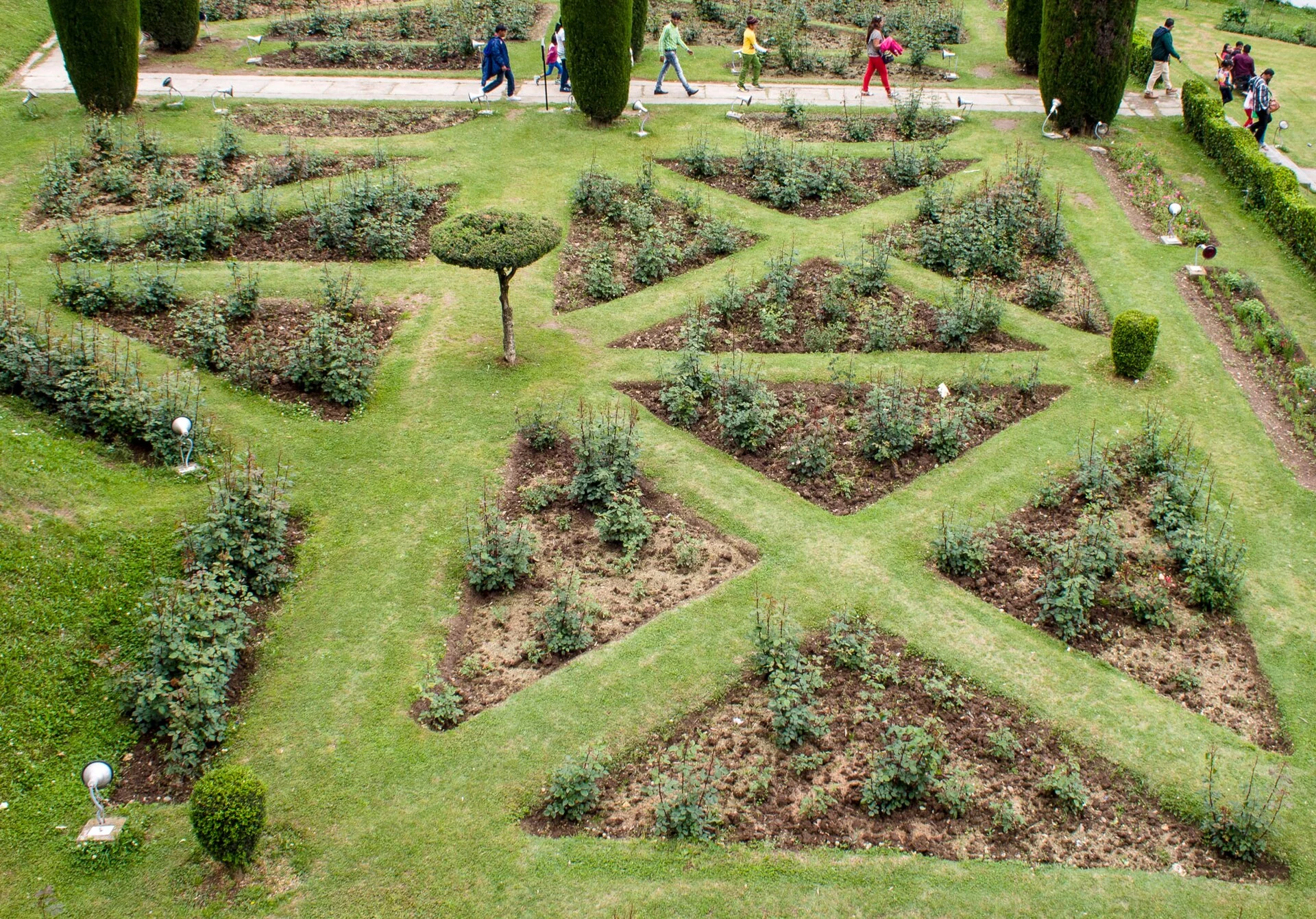
The accompanying photograph records planting at Chashme Shahi in May 2014. It documents one part of the garden rather than every terrace or the spring itself. [4]
![[4]](https://commons.wikimedia.org/wiki/File:Chashme_Shahi_Garden_(14526211636).jpg)
The map uses the UNESCO submission’s garden coordinates. [3]
Planning a visit
Ask about present opening arrangements and the practical route between levels. Steps and changes in level may matter more than the garden’s relatively modest size for a visitor with mobility needs. Protect planted beds and stone water features, and avoid obstructing the spring area. Combine the visit with a separate reading of Dal Lake to understand the broader landscape seen from the garden.
Photograph credit and map
Photograph: Mike Prince from Bangalore, India, via Wikimedia Commons, CC BY 2.0. Resized and converted to WebP; no scene elements altered. Recorded date: 2014-05-19 11:26.
Map marker: UNESCO Tentative List coordinates, converted from DMS; representative garden location.
For regional airport, railway and bus connections, consult the district transport guide.
Research date: 13 October 2026. Confirm changing access arrangements before travelling.
Sources & references
[1] District Srinagar — Chashma Shahi
https://srinagar.nic.in/tourist-place/chashma-shahi/ ↗
[2] Chashme Shahi — secondary historical/geographical reference
https://en.wikipedia.org/wiki/Chashme_Shahi ↗
[3] UNESCO — Mughal Gardens in Kashmir, Tentative List
https://whc.unesco.org/en/tentativelists/5580/ ↗
[4] Photograph source and licence
https://commons.wikimedia.org/wiki/File:Chashme_Shahi_Garden_(14526211636).jpg ↗
[5] District Srinagar — regional transport guide
Related reading
Dachigam National Park: Landscape, Hangul and Conservation
Dachigam’s protection history, varied terrain, water connections and wildlife-conservation context.
Dal Lake: Waterways, Floating Gardens and Life on the Lake
An introduction to Dal Lake’s connected basins, working waterscape, floating gardens, boats and cultural setting.
Hazratbal Shrine: Devotion, History and Lakeside Architecture
Hazratbal’s devotional traditions, relic associations and the history of its lakeside architectural setting.