
Bhand Pather: Theatre and Performance in Kashmir
Bhand Pather is a Kashmiri folk-theatre tradition combining dramatic scenes, movement, music and satire. Its performers use characters and situations to engage an audience with social life. A pather is therefore more than a sequence of dance steps: dialogue, comic timing and the relationship between players and spectators shape the performance.
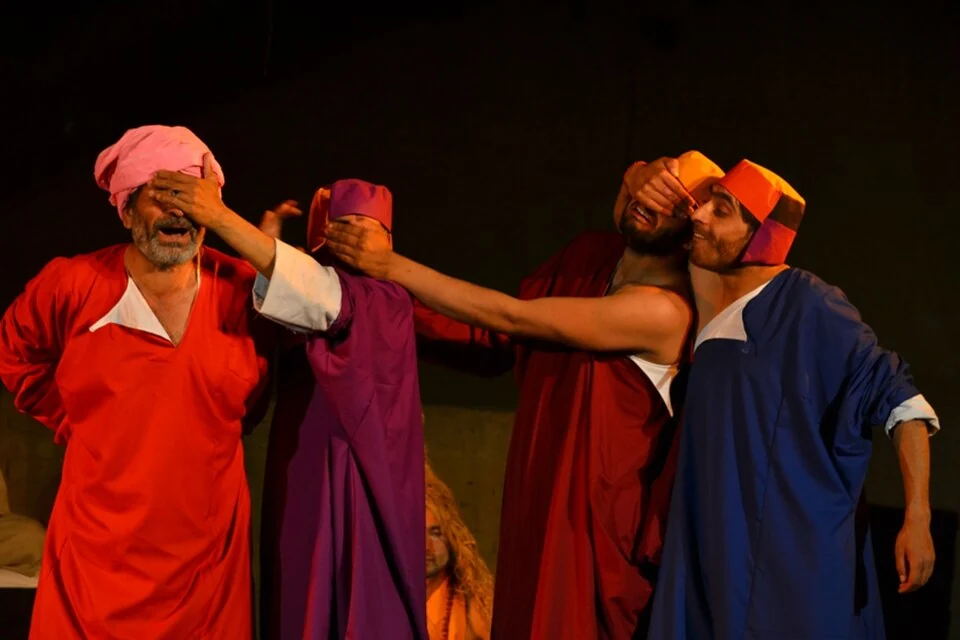
Bhand Pather is a Kashmiri folk-theatre tradition combining dramatic scenes, movement, music and satire. Its performers use characters and situations to engage an audience with social life. A pather is therefore more than a sequence of dance steps: dialogue, comic timing and the relationship between players and spectators shape the performance.[1]
Stories in public performance
The official tourism account describes plays interspersed with dance and connects their subjects with ordinary life, traditions and social problems. This helps explain why the form can entertain while also commenting on behaviour and authority. Humour creates a route into subjects that might be approached differently in a formal speech.[2]
The wider term bhand refers to entertainers across several parts of South Asia. That wider usage should not erase the particular Kashmiri theatre form. When identifying a photograph, the performer or troupe and the source's location matter; a similarly named community elsewhere is not automatically evidence of Bhand Pather in Kashmir.[1]
Actors, setting and audience
A theatrical scene can be understood through its roles, sequence and response from spectators. A costume or musical instrument is only one part of that scene. Recording the whole performance gives a better account of how characters enter, how situations develop and how the audience recognises a joke.
The distinction between a traditional repertoire and a particular production is also useful. A troupe can adapt length and staging to an occasion without making every production identical. Documentation that includes the performers' own explanation helps preserve their interpretation alongside an outsider's visual description.
Read Rouf for collective dance and Dumhal for another performance tradition. Kashmiri Language supplies context for the speech and song that carry meaning in theatre. This article uses Budgam as an editorial regional association, not as a boundary around all performers or the location of one permanent theatre. A current performance programme requires an organiser's dated announcement.
Image and map record
Image: Vinayak.razdan via Wikimedia Commons. Licence: CC BY-SA 3.0. Recorded capture date: 2013-04-05. Resized and converted to WebP; image content unchanged. This is a dated view, not confirmation of the site’s present appearance.

Map marker: 34.015, 74.722. Editorial regional-context marker. This biography, craft or cultural tradition is not a single physical destination. The point is not a verified birthplace, residence, workshop, exclusive origin, performance venue or cultural boundary. View location on OpenStreetMap · View Google Maps · Google directions · OpenStreetMap directions.
Research checked: 14 October 2026. For a visit, confirm current access, transport and opening information with the relevant authorities. This encyclopedia profile provides geographical and historical context.
Sources & references
[1] Reference overview: Bhand
https://en.wikipedia.org/wiki/Bhand ↗
[2] JKTDC: Dances of Kashmir
https://jktdc.co.in/info.aspx?id=101 ↗
Image and licence
Related reading
Budgam: Town and District Headquarters in Kashmir
Budgam, known as Badgom in Kashmiri, is a town and district headquarters in central Kashmir. Its name is also used for a district containing many othe
Charar-e-Sharief: Nund Rishi, Memory and a Living Shrine
Nund Rishi’s remembered teaching, the shrine’s rebuilding and continuing devotion within Budgam.
Doodhpathri: Meadow, Streams and the Budgam Uplands
Doodhpathri is a meadow destination in Budgam district's Khansahib area, in the Pir Panjal uplands.