
Nishat Bagh: Terraces, Water and the Dal Lake Landscape
Nishat’s early-seventeenth-century patronage, twelve terraces and relationship with the lakeside setting.
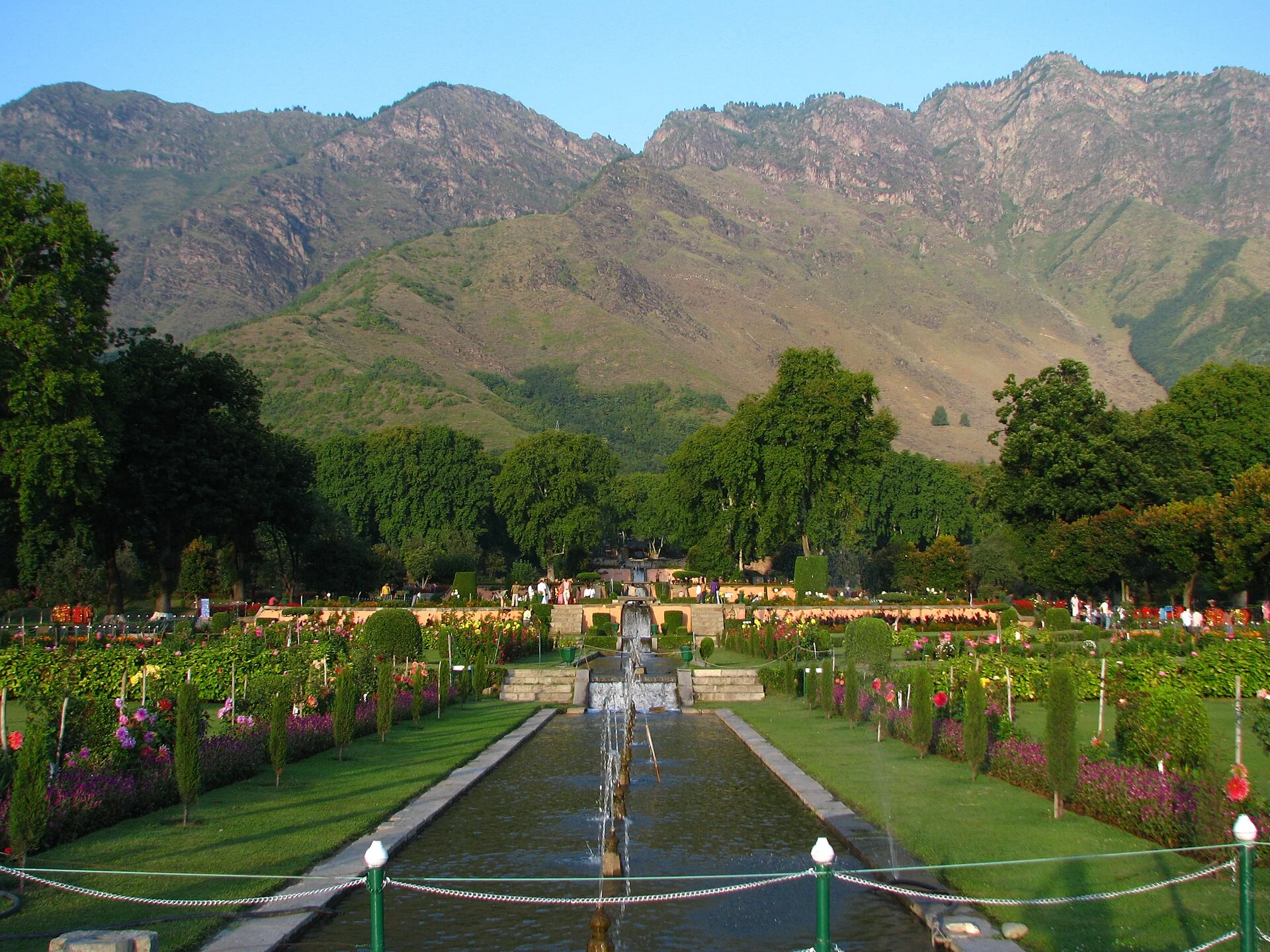
A garden rising from the lake
Nishat Bagh is a terraced Mughal garden on the eastern side of Dal Lake in Srinagar, with the Zabarwan landscape behind it. The district administration associates its construction with Asif Khan, the brother of Nur Jahan, and dates it to 1633. Its setting is central to its identity: rising ground, water and views toward the lake form a single composition. [1]
The name is commonly translated through words such as delight or joy. That translation introduces the intended character of the garden but does not fully explain its physical design. Understanding Nishat means looking at how the slope has been organised into a sequence of planted and built spaces.
Historical dating and interpretation
District and ministry accounts give 1633; UNESCO’s submission gives 1634. [2][3]
Stories involving Shah Jahan’s admiration for the garden and the interruption of its water supply appear in the district account. They are historical anecdotes in that narrative, not necessary explanations for every visible feature. The documented patronage and surviving layout provide a firmer starting point for a short architectural overview.
Terraces and the central channel
The district description identifies twelve terraces and a central descending channel. The rectangular arrangement adapts a Persian garden concept to the hill and its water source. Pools, fountains and stepped stone ramps accompany the movement of water down the site. At Nishat, a visitor can therefore read level changes through both the paths and the watercourse. [1]
A terrace is not just a flat area for planting. It changes the visitor’s viewpoint and the relationship between foreground detail and the lake beyond. Looking uphill emphasises the succession of levels; looking downhill connects those levels with a larger landscape. These are practical ways to observe the design without claiming that every present feature is unchanged from the original garden.
Planting and seasonal appearance
The Ministry’s description discusses chinar shade, flowers and changing autumn colour. Seasonal change is part of the garden’s visual character, but a particular photograph cannot guarantee an exact display on a later date. Species in bloom, leaf colour and fountain operation can vary with weather and management. [2]
For photography, the difference between a planted foreground and a broad landscape view is worth noticing. A frame focused on flowers can conceal the terracing; a wider frame can reveal how the channel connects the garden’s parts. Both document aspects of the place, and neither alone is a complete record.
Historic landscape status
Nishat appears in India’s UNESCO Tentative List submission for Kashmir’s Mughal gardens; this is not World Heritage inscription. [3]
Conservation involves more than preserving a picturesque view. Paths, retaining walls, water features and trees belong to an interconnected setting. Visitors can support that setting by staying on designated routes and avoiding damage to planting and masonry.
Photograph and map
The map uses UNESCO’s published garden coordinates; the photograph is dated September 2009. [3][4]
![[4]](https://commons.wikimedia.org/wiki/File:India_-_Srinagar_-_023_-_Nishat_Bagh_Mughal_Gardens.jpg)
Visiting and connections
Check current opening and ticket arrangements rather than relying on an older guide. Confirm the practical route if you need to avoid steps. Compare Nishat with Shalimar Bagh and Chashma Shahi, and use the Dal Lake entry to place the garden within its wider waterside landscape.
Photograph credit and map
Photograph: McKay Savage, via Wikimedia Commons, CC BY 2.0. Resized and converted to WebP; no scene elements altered. Recorded date: 2009-09-05 18:05:48.
Map marker: UNESCO Tentative List coordinates, converted from DMS; not an accessible-entrance assessment.
For regional airport, railway and bus connections, consult the district transport guide.
Research date: 13 October 2026. Confirm changing access arrangements before travelling.
Sources & references
[1] District Srinagar — Nishat Garden
https://srinagar.nic.in/tourist-place/nishat-garden/ ↗
[2] Ministry of Tourism — Nishat Bagh
https://www.incredibleindia.gov.in/en/jammu-and-kashmir/srinagar/nishat-bagh ↗
[3] UNESCO — Mughal Gardens in Kashmir, Tentative List
https://whc.unesco.org/en/tentativelists/5580/ ↗
[4] Photograph source and licence
https://commons.wikimedia.org/wiki/File:India_-_Srinagar_-_023_-_Nishat_Bagh_Mughal_Gardens.jpg ↗
[5] District Srinagar — regional transport guide
Related reading
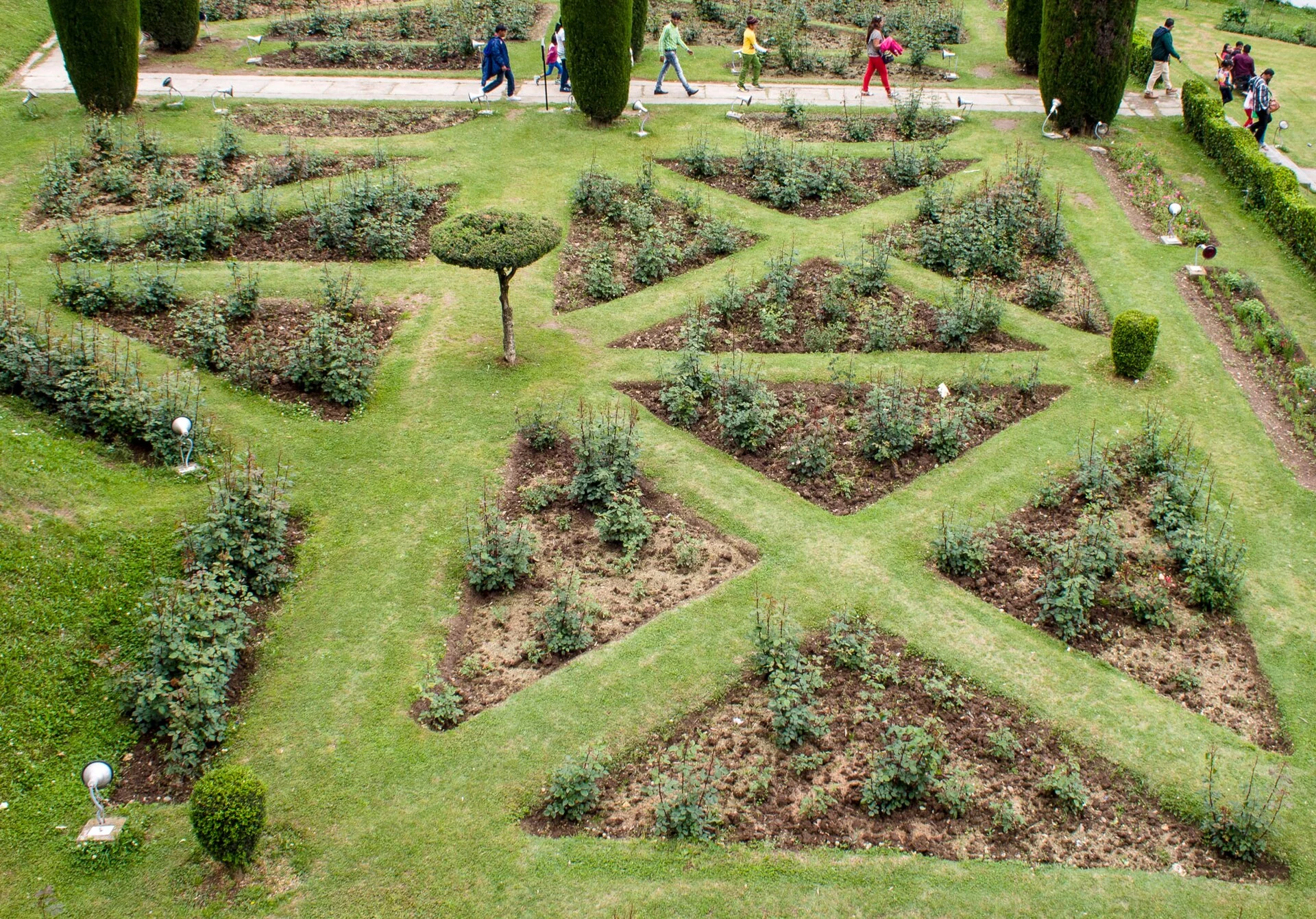
Chashma Shahi: The Royal Spring and Its Mughal Garden
The spring-centred design, Mughal commission, traditions and setting of Chashma Shahi.
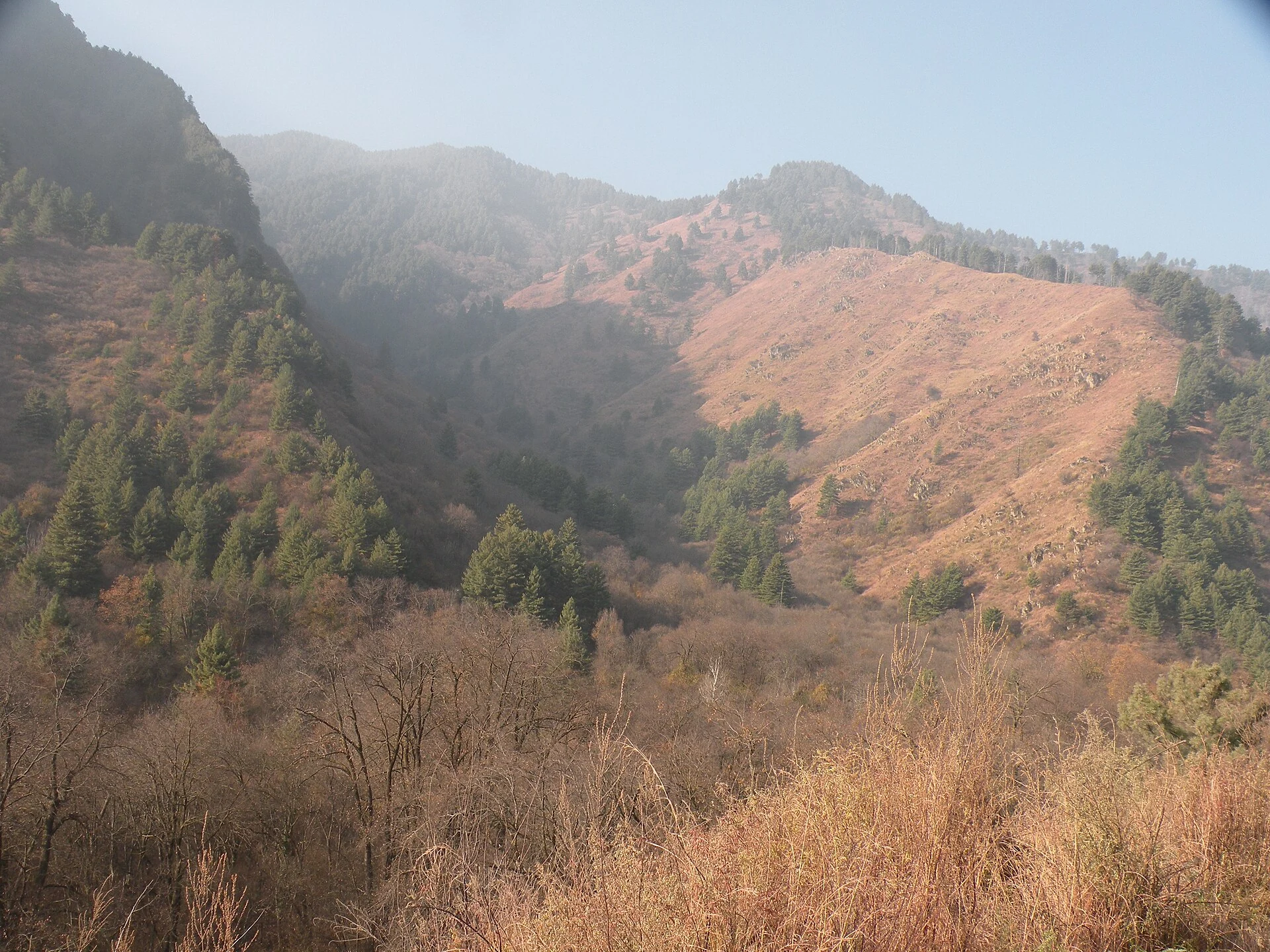
Dachigam National Park: Landscape, Hangul and Conservation
Dachigam’s protection history, varied terrain, water connections and wildlife-conservation context.
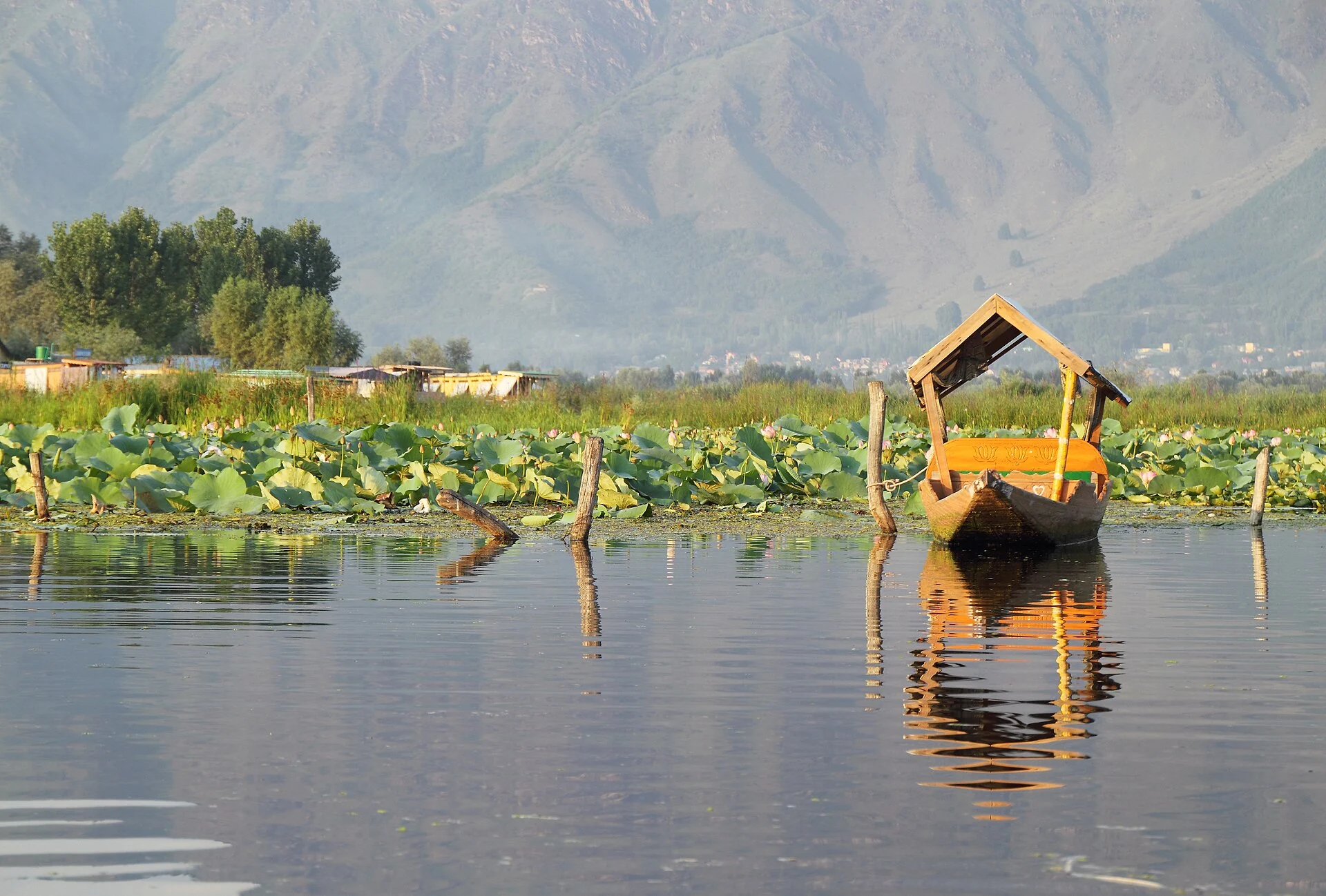
Dal Lake: Waterways, Floating Gardens and Life on the Lake
An introduction to Dal Lake’s connected basins, working waterscape, floating gardens, boats and cultural setting.
Referenced by
- Dal Lake: Waterways, Floating Gardens and Life on the Lake
- Shalimar Bagh: Mughal Patronage, Water and Garden Architecture
- Chashma Shahi: The Royal Spring and Its Mughal Garden
- Pari Mahal: Dara Shikoh, Learning and Terraced Architecture
- Hazratbal Shrine: Devotion, History and Lakeside Architecture
- Dachigam National Park: Landscape, Hangul and Conservation