
Hemis National Park: Mountain Habitat in Ladakh
Hemis National Park is a high-altitude protected landscape in Ladakh, associated particularly with snow-leopard habitat and mountain wildlife. The park covers a landscape of valleys, slopes and settlements rather than one enclosed visitor attraction. Hemis Monastery, from which the park takes its name, is a separate religious institution.
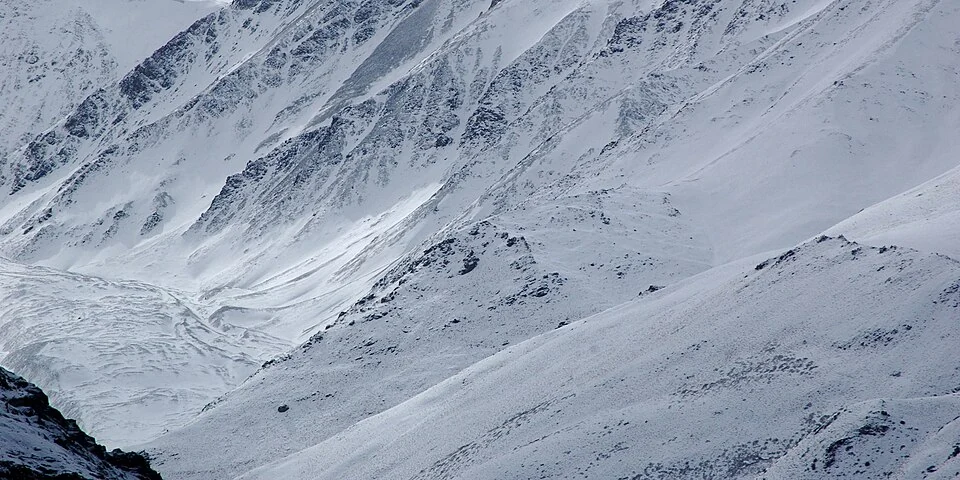
Hemis National Park is a high-altitude protected landscape in Ladakh, associated particularly with snow-leopard habitat and mountain wildlife. The park covers a landscape of valleys, slopes and settlements rather than one enclosed visitor attraction. Hemis Monastery, from which the park takes its name, is a separate religious institution.[1]
Habitat and protection
The Ladakh Forest, Ecology and Environment Department identifies Hemis High Altitude National Park among its protected areas. Its departmental record supplies the administrative context for conservation. A protected-area name describes a designated landscape; it does not automatically identify a surveyed entrance or a wildlife-viewing route.[2]
Reference accounts connect the park with snow leopards and mountain ungulates. Their presence explains the area's ecological significance without guaranteeing that a visitor will see a particular animal. Habitat records, individual observations and population estimates are different forms of evidence.[1]
Landscape and people
Local settlements and customary resource use are part of the park's setting. Government discussions of protected-area rights in Ladakh show why conservation cannot be described only as a boundary around empty land. Habitat management and community relationships need to be considered together.[3]
Mountain panoramas reveal terrain but not every habitat condition. A distant rocky slope may support animal movement that is invisible in a photograph. Ecological interpretation needs seasonal observation and documented species records, rather than conclusions drawn only from the colour or apparent barrenness of the landscape.
The park and a safari programme are also different subjects. An announced or operating programme should be described through its own current route and management record. A general park profile cannot promise access to all valleys or an encounter with elusive wildlife.
Read Snow Leopard, Hemis Monastery and Zanskar River for species, religious and geographical context. The park marker is a landscape-orientation point, not its legal boundary or an authorised gate. The supplied caption identifies the photographed setting instead of claiming to show the whole protected area.
Image and map record
Image: Prithwiraj Dhang via Wikimedia Commons. Licence: CC BY-SA 4.0. Recorded capture date: 2015-01-25 12:45:41. Resized and converted to WebP; image content unchanged. This is a dated view, not confirmation of the site’s present appearance.

Map marker: 33.98333333, 77.43333333. Source-recorded location for orientation; not a surveyed boundary, verified public entrance, current access guarantee or authorised stopping point. View location on OpenStreetMap · View Google Maps · Google directions · OpenStreetMap directions.
Research checked: 14 October 2026. For a visit, confirm current access, transport and opening information with the relevant authorities. This encyclopedia profile provides geographical and historical context.
Sources & references
[1] Reference overview: Hemis National Park
https://en.wikipedia.org/wiki/Hemis_National_Park ↗
[2] Ladakh Forest, Ecology and Environment Department
https://ladakh.gov.in/forest-ecology-environment-department/ ↗
[3] Ladakh administration: protected-area rights and community resources
Image and licence
https://commons.wikimedia.org/wiki/File:Hemis_National_Park.jpg ↗
Related reading
Barley in Ladakh: Cultivation and Regional Food Traditions
Barley is a cereal grass cultivated for its grain. In Ladakh it forms part of the relationship between farming, household food and a limited mountain
Chang La: A High Pass on the Route towards Pangong
Chang La is a high mountain pass in Ladakh on the road corridor towards Durbuk, Tangtse and Pangong. It connects the Leh-side approaches through Karu
Dachigam National Park: Landscape, Hangul and Conservation
Dachigam’s protection history, varied terrain, water connections and wildlife-conservation context.