
Shey Palace: Royal Landscape and a Copper Buddha
Shey Palace and its associated monastery occupy a rocky rise in the Indus valley southeast of Leh.
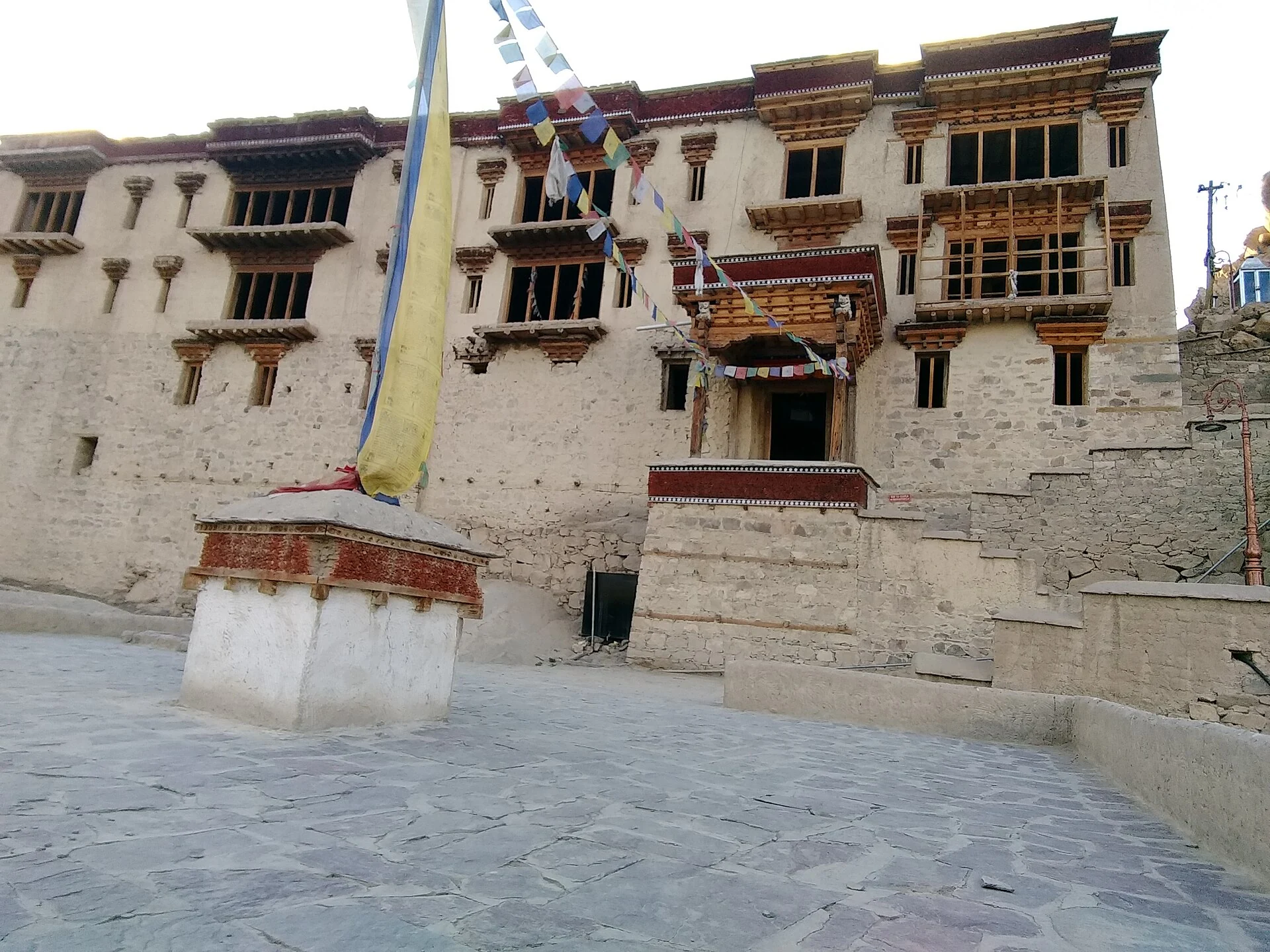
Shey Palace and its associated monastery occupy a rocky rise in the Indus valley southeast of Leh. The place is connected with Ladakh's former royal landscape and is particularly known for a large gilded copper image of Shakyamuni Buddha. “Shey” can refer to the village, palace, religious complex or surrounding heritage landscape; these names overlap in tourism accounts but should be separated when discussing individual buildings.[1]
Royal and religious layers
The official national tourism description associates the seventeenth-century palace with Deldan Namgyal and identifies 1655 as a construction date. Older royal remains and later structures belong to a layered history, so that date should not be attached to every ruin on the hill. A palace complex can preserve evidence from more than one period of use.[2]
The large Buddha image makes the religious character of Shey particularly visible. Its material and gilded appearance distinguish it from the buildings around it, while its subject is Shakyamuni rather than Maitreya. Comparative statements such as “largest” or “second largest” depend on the set of objects and measurements being compared; the image's historical and artistic interest does not require an unqualified ranking.[1]
The relationship between statue, room and hill is worth considering. An image seen in a photograph has been framed by the photographer, while the original is experienced within an architectural space. Lighting, sight lines and the placement of the viewer affect what can be seen. A picture of the exterior therefore cannot stand in for documentation of the copper image.
Reading the wider setting
Shey's position above the valley invites comparison with Leh Palace, while the nearby Thiksey entry explains a different kind of terraced religious complex. At Stakna, the relationship with a projecting riverside hill is especially prominent. These comparisons help identify architectural differences without treating the sites as one continuous monument.
Shey remains in Leh district under Ladakh's 2026 village allocation. Its entry is placed under Forts & Palaces because of the palace subject, while its religious history remains integral to the text. Current access to particular interiors and any conservation restrictions should be checked locally; the map marker locates the complex rather than certifying an open entrance.
Photograph and map record
Photograph: Kmohankar via Wikimedia Commons. Licence: CC BY-SA 4.0. Recorded capture date: 2019-05-08 18:40:21. Resized and converted to WebP; scene content unchanged. This is a dated view, not confirmation of the site’s present appearance.

Map marker: 34.07166667, 77.63277778. Representative location from the secondary geographical record, not a surveyed boundary or verified visitor entrance. View location on OpenStreetMap · View Google Maps · Google directions · OpenStreetMap directions.
Research checked: 14 October 2026. For a visit, confirm current access, transport and opening information with the relevant authorities. This encyclopedia profile provides geographical and historical context.
Sources & references
[1] Shey Monastery — secondary historical/geographical overview
https://en.wikipedia.org/wiki/Shey_Monastery ↗
[2] Ministry of Tourism: monasteries in Ladakh, including Shey
https://www.incredibleindia.gov.in/en/ladakh/leh/monasteries-in-ladakh ↗
Photograph and licence
Related reading
Bahu Fort: Jammu’s Riverside Fortification and Sacred Precinct
A fortified setting above the Tawi with a living Kali shrine and adjoining garden landscape.
Gurdwara Pathar Sahib: Sikh Tradition in the Indus Valley
Gurdwara Pathar Sahib is a Sikh place of worship in the Indus-valley corridor west of Leh.
Hari Parbat Fort: Hill, Fortification and the Old City
The distinction between Hari Parbat’s outer wall, summit fort and neighbouring sacred institutions.