
Thiksey Monastery: Terraced Architecture and Living Buddhist Practice
Thiksey, also written Thikse, is a Gelug Buddhist monastery in the Indus valley southeast of Leh.
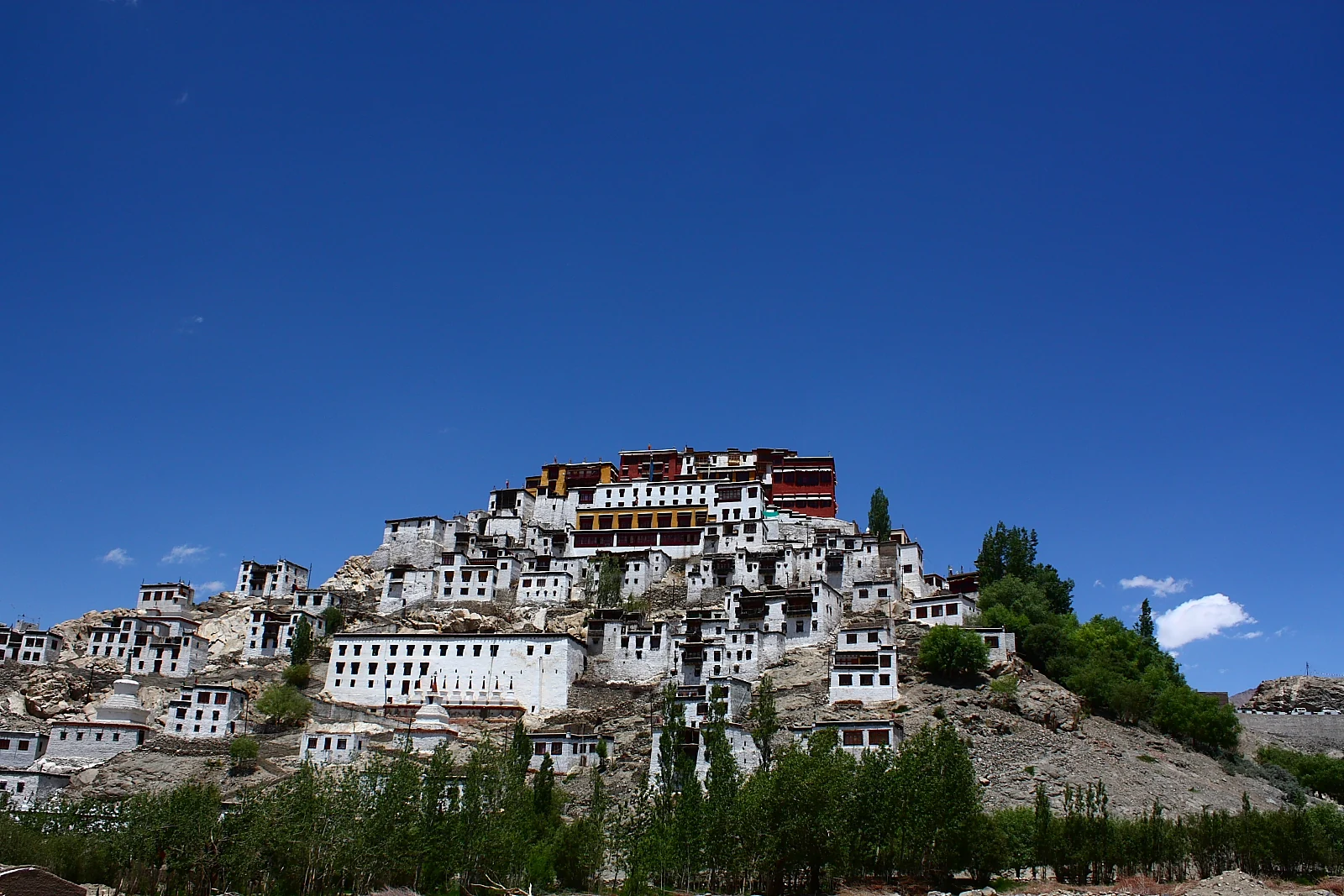
Thiksey, also written Thikse, is a Gelug Buddhist monastery in the Indus valley southeast of Leh. Its buildings rise across a hillside, producing the terraced silhouette for which it is widely recognised. Comparison with the Potala Palace in Lhasa is common in visitor descriptions, but the resemblance is an architectural analogy: Thiksey has its own local history, religious community and arrangement of spaces.[1]
A hillside arrangement
The district tourism account identifies Thiksey as an important monastic centre with images, stupas, painted scrolls and wall paintings. These objects and structures should not all be read at the same scale. An external view reveals the massing of buildings, whereas a painted scroll or wall image requires attention to subject, use and individual provenance.[2]
The large Maitreya image is one of the complex's best-known features. It belongs to a modern phase of the monastery's development and should be distinguished from older foundations and buildings. Maitreya represents the future Buddha; that identity is different from the seated Shakyamuni image associated with Shey. The names describe particular religious subjects, not interchangeable labels for any large statue.[1]
The hilltop form can look like one unified monument from a distance. Closer study reveals entrances, routes between levels and spaces with different purposes. This matters for accessibility as well as architectural interpretation. A road reaching a complex does not establish that every upper room can be entered without stairs.
Living heritage in the Indus valley
The site is a religious institution as well as a major destination. The clearest descriptions therefore distinguish visitor spaces from the routines and needs of the resident community. Room access, photography and ritual times should be established through current arrangements, rather than inferred from photographs or older guidebooks.
Thiksey remains within Leh district under the 2026 district framework. Compare its stepped composition with the riverside hill setting of Stakna and the broader religious history of Hemis. Together, these places demonstrate that Ladakh's monasteries share regional connections while differing in affiliation, patronage, architecture and the relationship between older fabric and later additions.
Photograph and map record
Photograph: Aksveer via Wikimedia Commons. Licence: CC BY-SA 4.0. Recorded capture date: 2012-06-21 12:06:51. Resized and converted to WebP; scene content unchanged. This is a dated view, not confirmation of the site’s present appearance.

Map marker: 34.05566944, 77.6665. Representative location from the secondary geographical record, not a surveyed boundary or verified visitor entrance. View location on OpenStreetMap · View Google Maps · Google directions · OpenStreetMap directions.
Research checked: 14 October 2026. For a visit, confirm current access, transport and opening information with the relevant authorities. This encyclopedia profile provides geographical and historical context.
Sources & references
[1] Thikse Monastery — secondary historical/geographical overview
https://en.wikipedia.org/wiki/Thikse_Monastery ↗
[2] Leh district: Thiksey Monastery
https://leh.nic.in/tourist-place/thiksey-monastery/ ↗
Photograph and licence
https://commons.wikimedia.org/wiki/File:Thikse_Monastery_.jpg ↗
Related reading
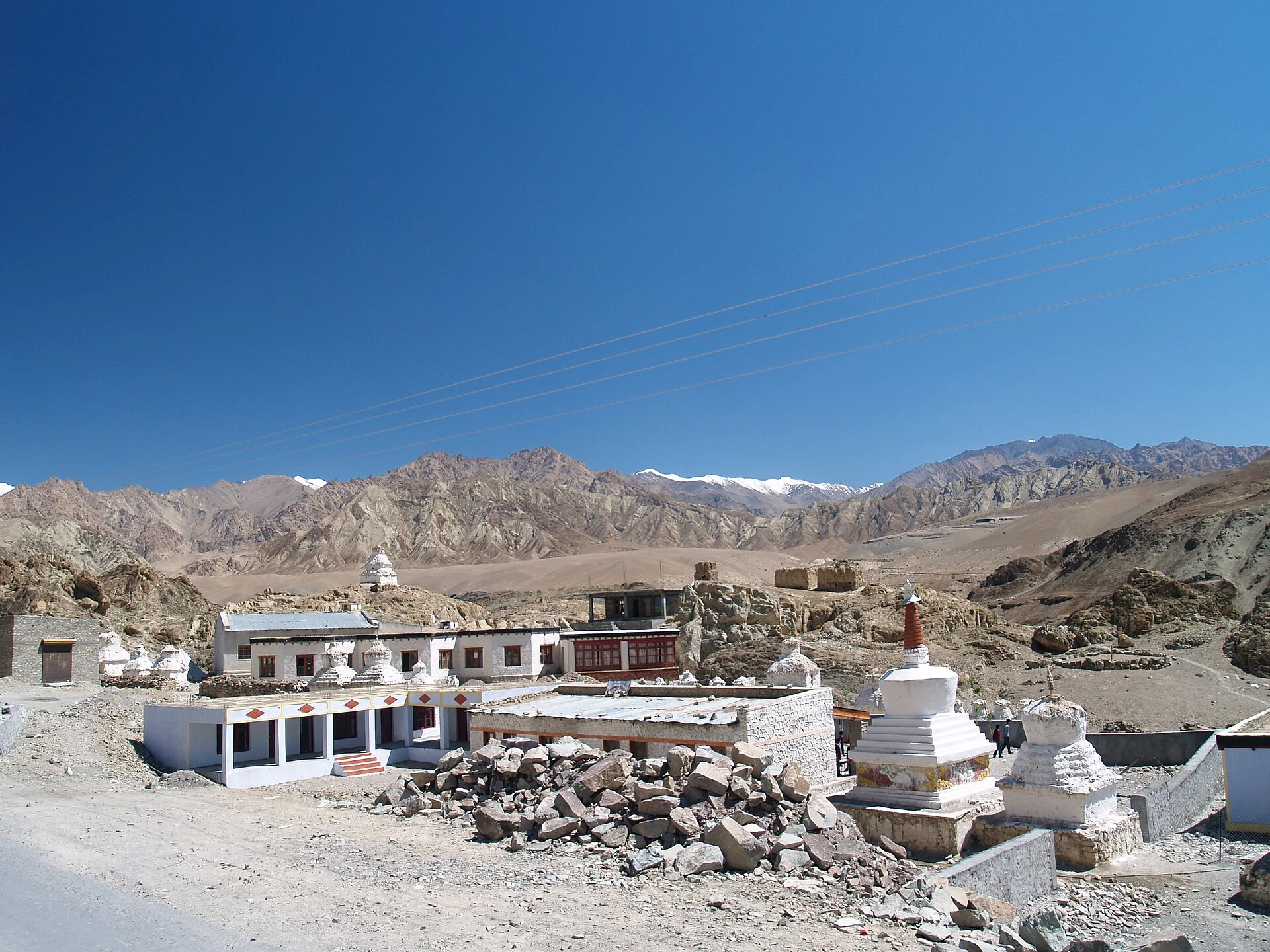
Alchi: Painted Temples and the Art of Western Himalayan Buddhism
Alchi is a Buddhist temple complex in the lower Indus valley, known especially for its painted interiors, sculpture and carved woodwork.
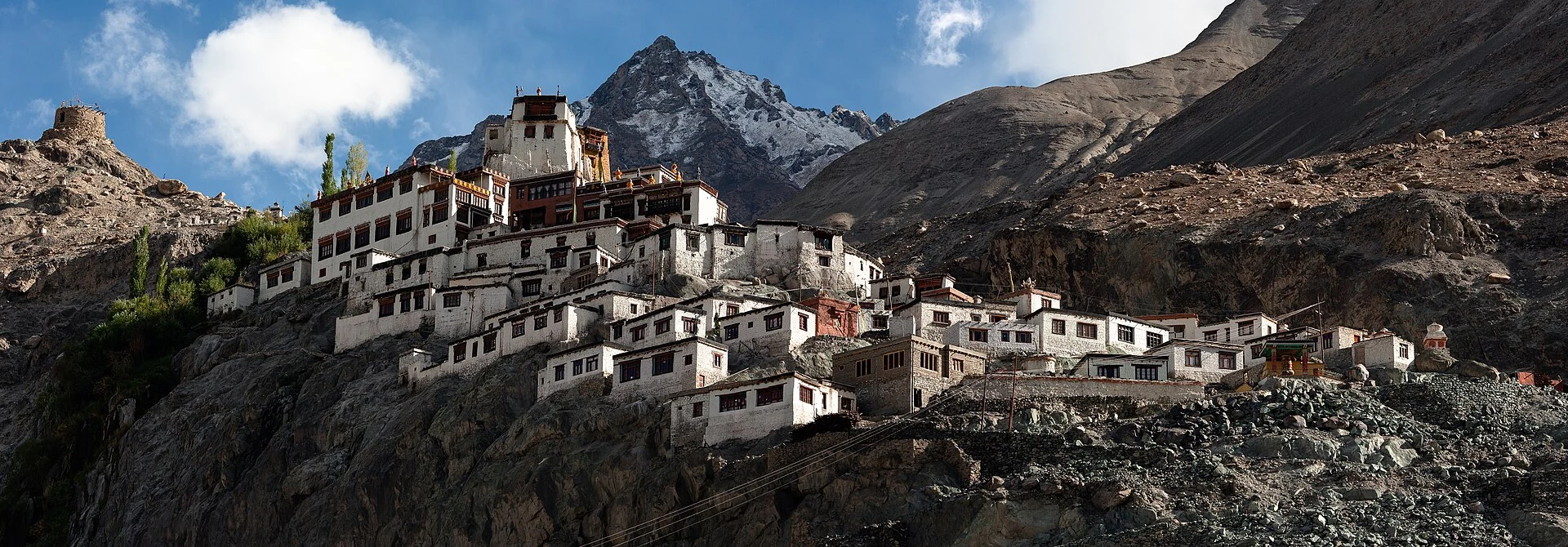
Diskit Monastery: Gelug Heritage and the Nubra Valley
Nubra’s Gelug monastery, hillside architecture, community life and the newer district classification.
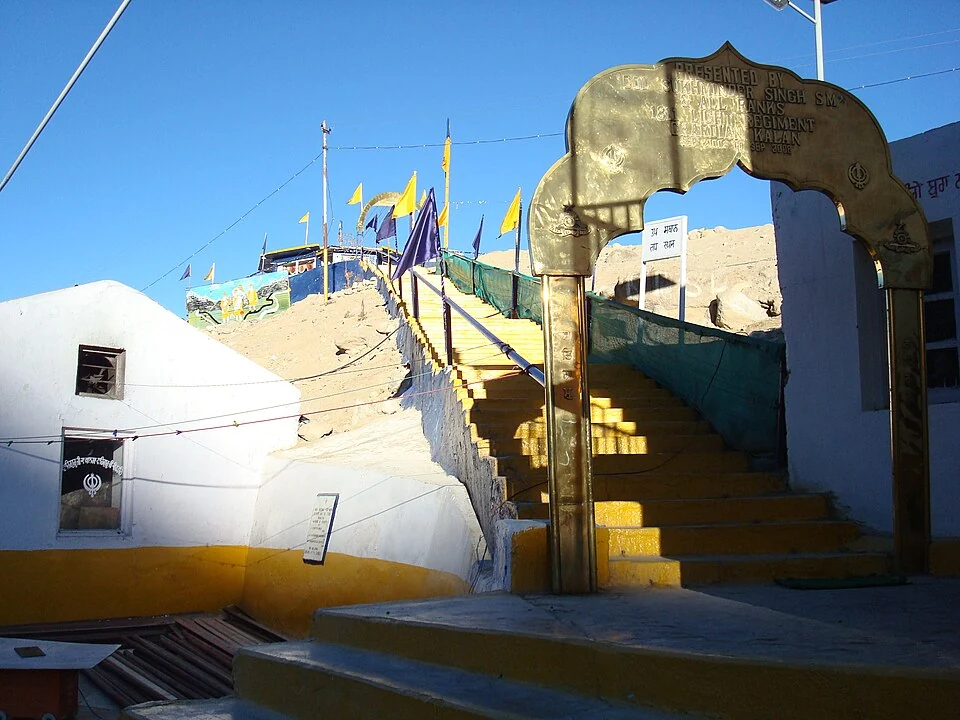
Gurdwara Pathar Sahib: Sikh Tradition in the Indus Valley
Gurdwara Pathar Sahib is a Sikh place of worship in the Indus-valley corridor west of Leh.